

- Scaloni to stay on as Argentina head coach until 2030 |
- Spain overtakes Germany as top EU market for Bangladeshi apparel |
- Trump sidelines Vance from Iran talks, says no need to negotiate |
- Information Commission to remain independent, neutral: CIC Nahreen |
- PM returns home from Turkiye after attending COP31 |
Trump sidelines Vance from Iran talks, says no need to negotiate
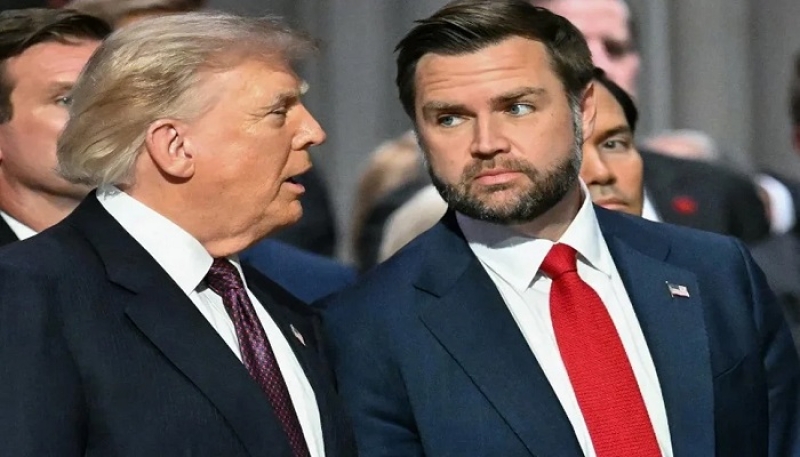
Photo: collected
US President Donald Trump stated on Thursday that the United States has abandoned all plans to negotiate with Iran, seemingly undercutting Vice President JD Vance’s recent efforts to act as a diplomatic mediator in the ongoing conflict.
"We don't need a deal with Iran. Those days have long since passed...We've got their money, Hundreds of Billions of Dollars, and we've got their Strait!" Trump posted online, pointing to the critical Hormuz waterway.
The declaration marks a sudden reversal from earlier in the week, when Trump claimed that active negotiations were underway and that momentum was building toward a political resolution.
He appeared to relegate Vance to handling a new domestic file of what he called the “corrupt disasters” of Democrat-run cities and states.
“I have asked the Vice President to focus his complete and total attention on the Massive Corruption and Crime taking place,” Trump wrote.
Vance had put himself at the centre of efforts to revive a political settlement with Iran and has been opining on US foreign policy in the Middle East since Democrats won a historic midterm election landslide on 3 November.
"The reason we lost is the war. The president himself said so last night," Vance wrote on X, also blaming the Republican Party’s association with Israel for its poor performance in the elections.
Middle East Eye was the first to report, citing Turkish intelligence chief Ibrahim Kalin at a press briefing, that Qatar would host a meeting between Vance and Iranian national security official Mohsen Rezaei.
Iran officially denied that talks were scheduled, but behind the scenes, the US appeared to be pushing for a meeting.
The Wall Street Journal reported on Wednesday that Vance had initiated outreach with Rezaei, requesting a meeting. The report said Trump had approved the outreach.
The US president’s decision to abruptly sideline Vance may suggest a difference of opinion among advisors.
US Secretary of State Marco Rubio said the US was in no hurry to strike a deal because it believes it has the upper hand in the Strait of Hormuz, where Iran and the US are locked in competing blockades.
Trump’s decision to call off negotiations is likely to unnerve regional allies and partners whose economies are suffering from the lack of clarity on US policy.
"We should... prepare for a long period of uncertainty in which neither a decisive resolution nor stable regional order can be taken for granted,” Anwar Gargash, diplomatic advisor to UAE President Mohamed bin Zayed, said.
Other US partners have called for engagement. At a conference in Sulaymaniyah, Iraq, a senior Kurdish official aligned with the US said Washington must “talk” with Tehran.
"We don't find it difficult talking to the Iranians…As an ally of Mr Trump and, strangely, an ally of the Iranians, [I say] the mighty US can do it," Bafel Talabani, the head of the Patriotic Union of Kurdistan party, said.
Source: Middle East Eye