

- Zelenskyy warns Starshield limits are hindering drone interceptions |
- Govt considers revamping school food distribution system |
- Service tenure expiry leads to retirement of five BAF officers |
- HSC supplementary exams scheduled to begin on December 1 |
- US ambassador meets Indian High Commissioner amid political uncertainty |
The Timeless Allure of Medieval Armor in The Modern World
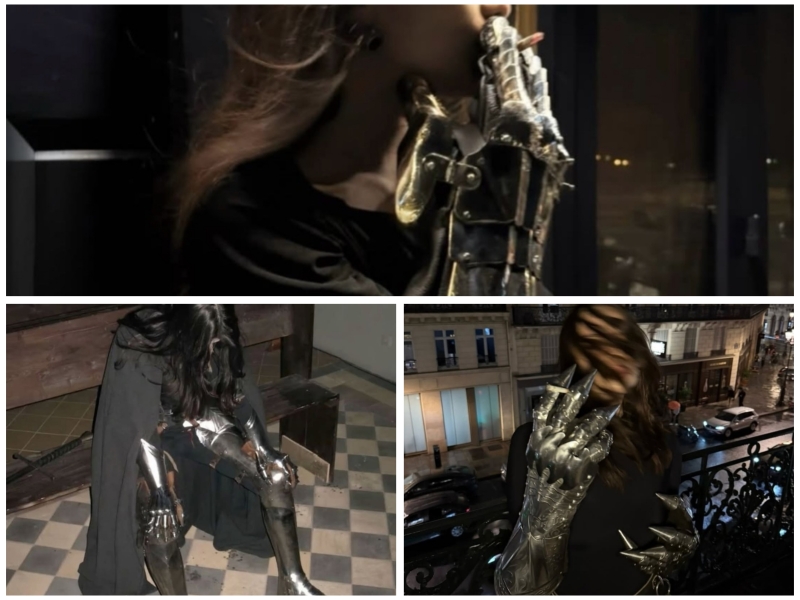
Image: Collected
Medieval armor has escaped the battlefield and entered the modern imagination. It appears in museums, films, video games, fashion collections, cosplay conventions, and social-media feeds, where its polished steel surfaces and imposing silhouettes continue to fascinate people centuries after knights last wore it in combat. The appeal is not simply nostalgia for a violent past; it is the way armor transforms the human body into something sculptural, protected, mysterious, and larger than life.
At its core, armor represents a universal desire for safety. In a world shaped by uncertainty, conflict, digital exposure, and constant pressure, the image of a person enclosed in steel carries an almost primal emotional charge. A helmet hides the face, a breastplate shields the heart, and layered plates suggest that vulnerability can be controlled. Medieval armor therefore becomes more than historical equipment; it becomes a visual metaphor for resilience and self-preservation.
Armor was also always an object of art. Medieval and Renaissance armorers did not treat protection and beauty as separate goals. They shaped metal to follow the body, borrowed details from fashionable civilian clothing, and decorated surfaces with engraving, gilding, embossing, and intricate patterns. A suit of armor could announce wealth, rank, allegiance, and taste as clearly as it could deflect a blade. In this sense, armor was wearable sculpture long before contemporary artists began calling it that.
That artistic quality explains why modern designers keep returning to it. Fashion has reinterpreted armor through metallic fabrics, molded bodices, chainmail details, structured shoulders, and sculptural silhouettes. These designs rarely aim to recreate authentic historical armor. Instead, they use its language—the gleam of metal, the hardness of plates, the concealment of the body, and the suggestion of strength—to explore contemporary ideas about identity, gender, power, and vulnerability. A modern breastplate may be made from mesh, plastic, ceramic, or fabric, but it still asks the same question: what does it mean to protect oneself in public?
Video games and fantasy media have intensified this obsession. Games often treat armor as both practical equipment and personal style, allowing players to assemble helmets, capes, engravings, colors, and silhouettes into a visual identity. The medieval aesthetic has become a shared visual vocabulary, even when the worlds it appears in are imaginary. Players and fans then carry those images back into reality through cosplay, live-action role-playing, replica collecting, and fan art, turning digital fantasy into physical expression.
The continued fascination with armor also reveals something about modern craftsmanship. Most everyday objects are now mass-produced, lightweight, and designed to be replaced. Armor, by contrast, feels substantial and enduring. Its rivets, articulated joints, curved plates, and hand-finished surfaces suggest patience, skill, and permanence. Even a replica can evoke the pleasure of seeing an object that appears to have been made with intention rather than convenience.
Yet the most compelling modern interpretations of armor are often those that question its promise of invincibility. Artists may create armor that is fragile, impractical, transparent, or deliberately incomplete. Such work acknowledges that no material can fully protect a person from fear, grief, criticism, or violence. The armor becomes honest precisely when it fails to make the wearer untouchable. It stops being a fantasy of invulnerability and becomes a statement about the human need to endure.
Medieval armor endures because it gives form to a contradiction at the heart of being human: we want to be strong, but we are never invulnerable. It turns fear into craftsmanship and vulnerability into spectacle. Whether displayed behind museum glass, worn on a runway, or rendered in a digital world, the armored figure remains powerful because it asks an enduring question—what would we become if we could make ourselves unbreakable?