

- Oil Shock Sends Asian Markets Lower as Middle East Conflict Threatens Global Shipping |
- Trump Links Iran War to US Midterms, Backs United Ireland |
- PM Tarique Rahman Seeks Public Cooperation to Tackle Nationwide Dengue Outbreak |
- Jatiyatabadi Mahila Dal Vows to Lead Fight Against Rape, Violence Against Women and Children |
- 'Honorable' Dropped: PM Starts Implementing Decision from His Own Office |
Buddhism: A Path of Wisdom, Compassion and Inner Peace
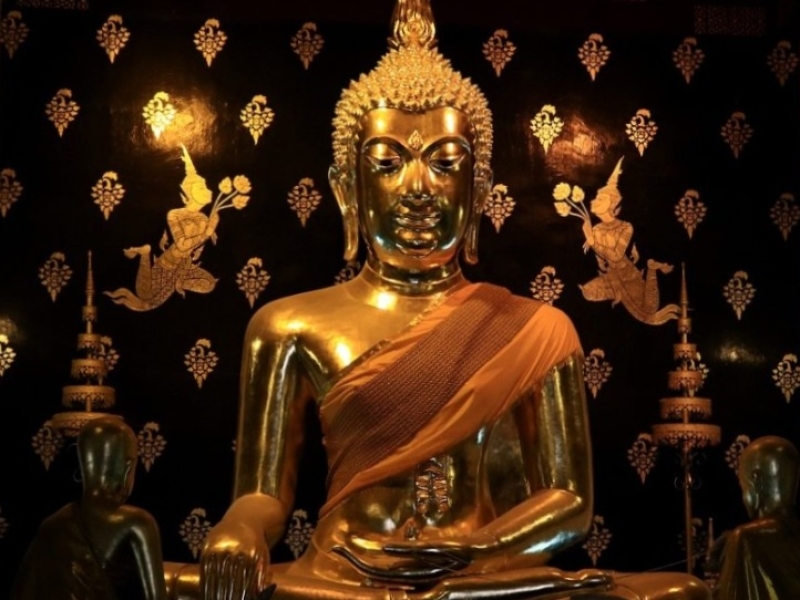
Image: Collected
Buddhism is one of the world’s major religions and philosophical traditions, founded more than 2,500 years ago in ancient India. At its heart is the search for freedom from suffering through wisdom, ethical living and mental discipline. Unlike many religious traditions, Buddhism does not centre on the worship of a creator god. Instead, it focuses on understanding the nature of existence and transforming the mind.
The Life of Siddhartha Gautama
Buddhism traces its origins to Siddhartha Gautama, who later became known as the Buddha, meaning “the Awakened One.” According to Buddhist tradition, Siddhartha was born into a royal family in the region of present-day Nepal.
He lived a protected life of comfort until encounters with old age, illness, death and a religious ascetic made him aware of the suffering present in human life. These experiences led him to leave his privileged life and search for an answer to suffering.
After years of study and severe ascetic practices, Siddhartha adopted a middle path between extreme luxury and extreme self-denial. While meditating under the Bodhi tree at Bodh Gaya, he attained enlightenment and became the Buddha.
He then began teaching what he had discovered, establishing a community of monks and followers. His teachings eventually spread across much of Asia and developed into several major Buddhist traditions.
The Four Noble Truths
The foundation of Buddhist teaching is commonly expressed through the Four Noble Truths.
The first truth states that life involves dukkha, a term often translated as suffering, dissatisfaction or unease. Birth, illness, ageing and death are obvious forms of suffering, but Buddhism also recognises that even pleasant experiences are temporary.
The second truth identifies the causes of suffering. Buddhism particularly emphasises craving, attachment and ignorance. People often desire things to remain permanent even though everything in the world is subject to change.
The third truth teaches that suffering can come to an end. By overcoming craving and ignorance, a person can attain liberation from the cycle of suffering.
The fourth truth presents the path toward that liberation: the Noble Eightfold Path.
The Noble Eightfold Path
The Noble Eightfold Path provides a practical framework for Buddhist life. It consists of Right View, Right Intention, Right Speech, Right Action, Right Livelihood, Right Effort, Right Mindfulness and Right Concentration.
These principles cover wisdom, ethical conduct and mental development. Rather than being viewed simply as a list of rules, they are intended to guide individuals toward a more disciplined and compassionate way of living.
Karma, Rebirth and Nirvana
Karma is another important concept in Buddhism. It refers broadly to intentional actions and their consequences. Actions motivated by greed, hatred and ignorance are understood to produce harmful consequences, while actions rooted in generosity, compassion and wisdom produce beneficial consequences.
Many Buddhist traditions also teach rebirth. However, Buddhism differs from religions that teach the existence of an eternal, unchanging soul. Instead, Buddhist teachings describe existence as a continuing process shaped by causes and conditions.
The ultimate goal is nirvana, understood as liberation from craving, ignorance and the cycle of suffering and rebirth. It represents the end of the conditions that keep suffering going.
Meditation and Mindfulness
Meditation plays a central role in many Buddhist traditions. Through practices involving concentration and mindfulness, practitioners seek to understand their thoughts, emotions and experiences more clearly.
Mindfulness encourages awareness of the present moment without immediately reacting to it. Over time, such practices can support greater concentration, self-awareness and emotional discipline.
Major Buddhist Traditions
Over centuries, Buddhism developed into several major traditions. The three commonly recognised branches are Theravada, Mahayana and Vajrayana.
Theravada Buddhism is particularly influential in countries such as Sri Lanka, Thailand, Myanmar, Laos and Cambodia. Mahayana Buddhism became prominent in countries including China, Japan, Korea and Vietnam and encompasses traditions such as Zen and Pure Land Buddhism.
Vajrayana Buddhism is strongly associated with Tibet and the Himalayan region and incorporates distinctive forms of meditation, ritual and tantric practice.
Despite their differences, these traditions share fundamental teachings associated with the Buddha, including the importance of overcoming suffering, cultivating wisdom and developing compassion.
Buddhism in the Modern World
Today, Buddhism is practised by millions of people across Asia and in communities throughout the world. Buddhist ideas have also attracted interest beyond traditionally Buddhist societies, particularly teachings related to meditation, mindfulness, compassion and ethical living.
Buddhism has therefore developed not only as a religious tradition but also as a significant influence on philosophy, art, literature and culture.
At its core, Buddhism offers a path based on understanding rather than unquestioning belief. Its central message is that suffering has causes, that those causes can be understood, and that individuals can transform their lives through wisdom, ethical conduct and disciplined attention.
For more than two millennia, these teachings have continued to shape the spiritual and cultural lives of people around the world.