

- Oil Shock Sends Asian Markets Lower as Middle East Conflict Threatens Global Shipping |
- Trump Links Iran War to US Midterms, Backs United Ireland |
- PM Tarique Rahman Seeks Public Cooperation to Tackle Nationwide Dengue Outbreak |
- Jatiyatabadi Mahila Dal Vows to Lead Fight Against Rape, Violence Against Women and Children |
- 'Honorable' Dropped: PM Starts Implementing Decision from His Own Office |
Govt to plant 2cr Keora trees across 4,400 coastal acres
ছবি- সংগৃহীত
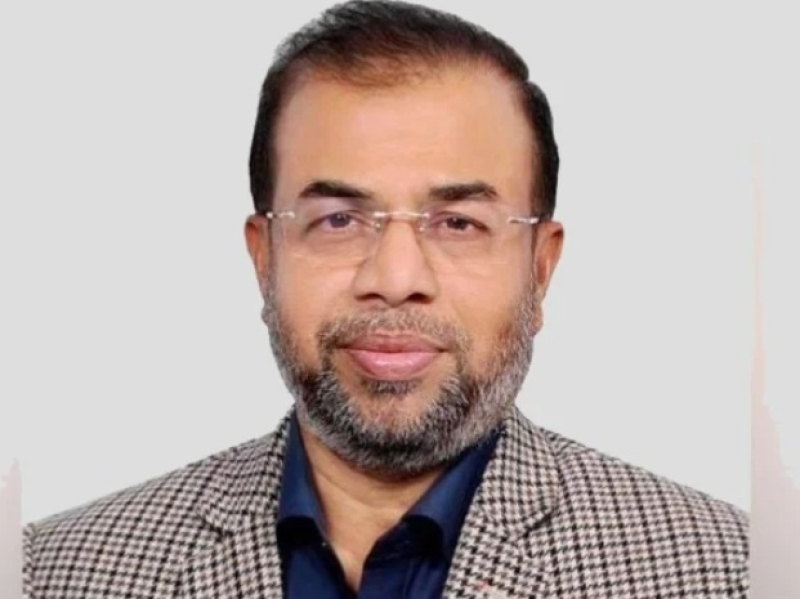
The government plans to plant 2 crore Keora trees across 4,400 acres of coastal land by December this year as part of its efforts to expand forest coverage and tackle environmental challenges, State Minister for Environment, Forest and Climate Change Shaikh Faridul Islam said today.
Speaking at the concluding session of a two-day programme at Jahangirnagar University (JU), the state minister said more than 2,300 acres of forest land had already been reclaimed, while 2.85 crore trees had been planted by the government.
He said a carbon credit programme would also be introduced for the first time under the coastal tree-planting project.
Shaikh Faridul made the remarks at the concluding session of the programme titled “Sustainable Plastic Waste Management Practices in Jahangirnagar University (Source Segregation Campaign)” at the Jannatul Ferdous Senate Building of JU.
The programme was jointly organised by the Jahangirnagar University Central Students’ Union (JUCSU) and NextEra for Environment, Equity & Rights (NEER).
The state minister said plastic pollution, microplastic contamination and lead pollution had emerged as major threats to the environment and public health.
He said the government had recently gazetted the Extended Producer Responsibility (EPR) policy. Under the policy, manufacturers of plastic products would be responsible for managing the waste generated from their products.
The government has also taken an initiative to formulate a new law aimed at building a lead-free Bangladesh, he added.
“Enacting laws and policies alone will not be enough. Source-based waste segregation must be ensured, while the sources of plastic and lead pollution need to be identified and effective measures taken,” Shaikh Faridul said.
He also warned that indiscriminate dumping of waste into rivers, canals and other water bodies was causing serious environmental damage and called on people to act responsibly.
The state minister emphasised the “Four Rs” — Reject, Reduce, Reuse and Recycle — for managing plastic waste. He also urged people to use biodegradable bags wherever alternatives to plastic are available.
Calling on students to spread environmental awareness in their communities, he encouraged them to take an active role in plastic waste management.
He also urged JU authorities to make the campus free of single-use plastics, saying the initiative could serve as an example for other universities in the country.
JU Vice-Chancellor Prof Dr Mohammad Kamrul Ahsan, who chaired the event, said effective implementation of environmental initiatives was more important than merely organising programmes.
He sought government support for constructing green barriers along the highway beside the female residential halls to reduce noise and air pollution. He also called for the installation of effluent treatment plants (ETPs) to protect water bodies and the development of a modern waste management system on the campus.
JU Pro-VC (Academic) Prof Dr Shamsul Alam, Pro-VC (Administration) Prof Dr Mohammad Nazrul Islam, Treasurer Prof Dr Sohel Rana, Director of the Students-Teacher Counselling Centre Prof Jamal Uddin, a UNIDO Bangladesh delegation, leaders of various student organisations and students were present at the programme.