

- Oil Shock Sends Asian Markets Lower as Middle East Conflict Threatens Global Shipping |
- Trump Links Iran War to US Midterms, Backs United Ireland |
- PM Tarique Rahman Seeks Public Cooperation to Tackle Nationwide Dengue Outbreak |
- Jatiyatabadi Mahila Dal Vows to Lead Fight Against Rape, Violence Against Women and Children |
- 'Honorable' Dropped: PM Starts Implementing Decision from His Own Office |
Factories Sit Idle as Gas Hookups Lag Behind Investment
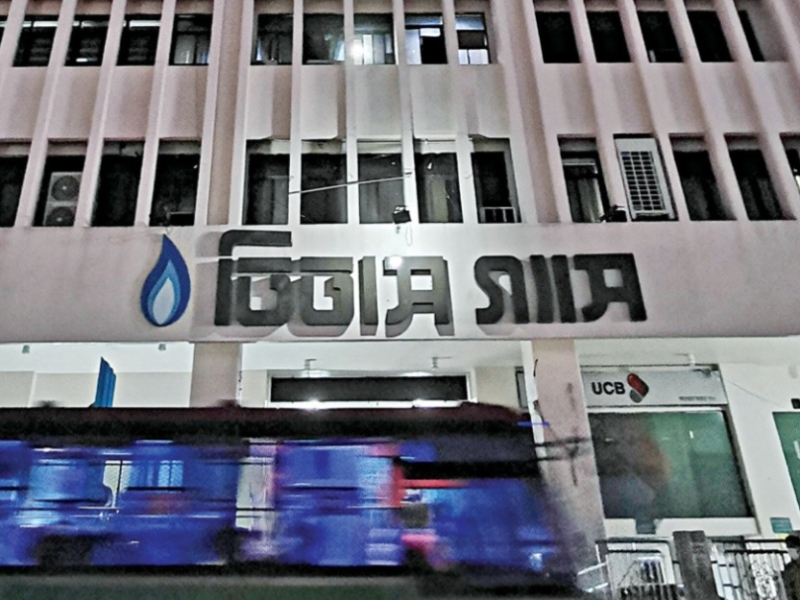
Image: Collected
Industry figures warn of mounting losses; minister signals move to open petroleum imports to private players
Industrialists raised alarm on Wednesday over dozens of mills and factories, built with investments running into hundreds of crores of taka, that still cannot begin operations because gas connections haven't come through — even though owners have already paid the required demand-note fees to the state-run Titas Gas Transmission and Distribution Company.
Entrepreneurs cautioned that the stalled start of production is jeopardizing sizable, long-term investments. With costly loans now due for repayment, many say they risk falling into default if the impasse drags on. They pointed out that struggling businesses don't just hurt individual owners — the broader economy suffers too, as halted output weakens exports and job creation.
The remarks came during an energy-security discussion in Dhaka attended by the energy minister, industrialists, exporters, trade body figures, energy specialists, and academics. Daily Bonik Barta organized the event, with Editor Dewan Hanif Mahmud serving as moderator.
Participants also took aim at the government's 15 percent VAT and 2 percent advance income tax on imported renewable-energy equipment, arguing the levies are slowing solar installation even as officials aim for 10,000MW of solar capacity by 2030.
Mostafa Kamal, chairman and managing director of Meghna Group of Industries, said he had paid Tk 140 crore to Titas for gas connections at a steel mill and glass factory in the Cumilla Economic Zone, both of which are ready to run but still lack connections. He said he separately spent Tk 700 crore in fees securing connections at the Meghna Economic Zone, where operational units also remain without gas. Kamal noted he still must service loans from foreign lenders that offer no rescheduling flexibility, leaving him anxious about default — a serious concern given that Meghna Group employs 65,000 workers across 57 industrial units. He also criticized what he called unhelpful conduct from government officials, including secretaries and deputy commissioners, saying it has made doing business harder.
Simeen Rahman, MCCI vice-president and CEO of Transcom Group, called energy security central to industrialization, exports, investment, and productivity as Bangladesh pushes toward economic transformation. She said gas shortfalls, voltage swings, and unplanned outages disrupt production, inflate costs, and inject uncertainty into supply chains — costs that ultimately land on consumers through diesel-generator reliance and higher transport expenses. In pharmaceuticals, she added, steady power isn't just about output but about protecting life-saving medicines throughout the supply chain. She said industrial investment is a long-term bet, and entrepreneurs need policy consistency, dependable supply, fair pricing, and predictable energy security.
Titas Gas Managing Director Shahnewaz Parvez said roughly 1,300 connection applications are awaiting action at his office, with delays tied to insufficient exploration; 500 of those applicants have received demand notes but no connection yet. Titas serves 4,500 industrial units across 13 districts, supplying 60 percent of the nation's industrial gas. Gazipur faces the worst shortages, he said, with daily industrial demand at 2,200 million cubic feet against Titas's supply capacity of just 1,500 MMcf/d.
BAPEX Managing Director Fazlul Haque said exploration is underway at 29 wells, with five additional rigs being procured to expand the effort. Energy Minister Iqbal Hasan Mahmud said the government intends to let private companies import petroleum products to ease the subsidy load, and that plans are also in motion to privatize power distribution for the same reason — noting the state currently imports and produces energy at high cost while selling it cheaper, swelling subsidy costs.