

- Oil Shock Sends Asian Markets Lower as Middle East Conflict Threatens Global Shipping |
- Trump Links Iran War to US Midterms, Backs United Ireland |
- PM Tarique Rahman Seeks Public Cooperation to Tackle Nationwide Dengue Outbreak |
- Jatiyatabadi Mahila Dal Vows to Lead Fight Against Rape, Violence Against Women and Children |
- 'Honorable' Dropped: PM Starts Implementing Decision from His Own Office |
George Orwell: The Visionary Writer Who Warned the World
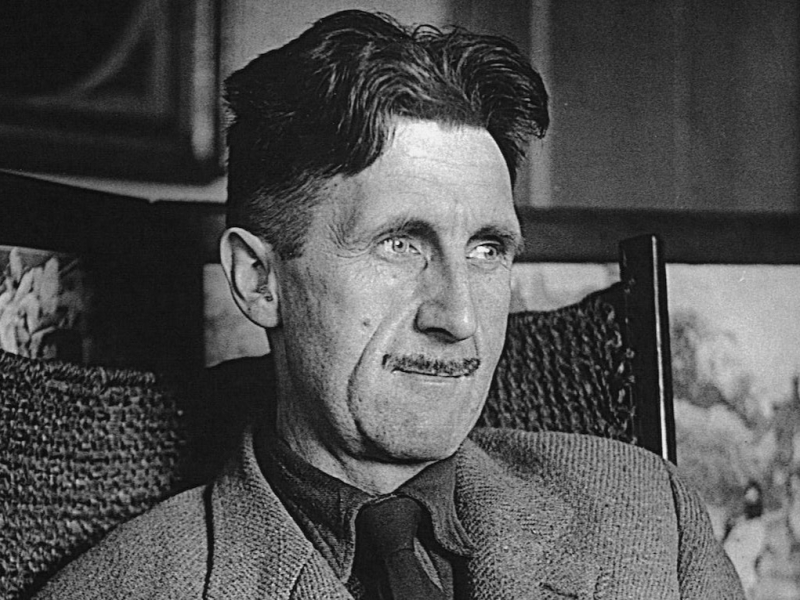
Image: Collected
Few writers have left a mark on modern literature as profound as George Orwell. Renowned for his fearless criticism of authoritarianism, political manipulation, and the abuse of power, Orwell's works continue to resonate with readers across generations. His writing transcends fiction, serving as both a literary achievement and a timeless warning about the fragility of truth and freedom.
Born Eric Arthur Blair on June 25, 1903, in Motihari, Bihar, then part of British India, Orwell was educated in England before embarking on a career that included journalism, essay writing, and fiction. Adopting the pen name "George Orwell," he developed a distinctive literary voice rooted in honesty, clarity, and social conscience.
Orwell's experiences with poverty, colonialism, and political conflict profoundly shaped his worldview. Rather than writing from imagination alone, he drew upon real-life observations to expose injustice, inequality, and the dangers of unchecked authority. His commitment to truth made him one of the most influential political writers of the twentieth century.
His two most celebrated novels, Animal Farm and , remain enduring classics of world literature. Animal Farm uses the allegory of a group of farm animals to reveal how revolutionary ideals can be corrupted by those who seize power. Nineteen Eighty-Four, meanwhile, portrays a chilling dystopian society where surveillance, censorship, and propaganda dominate every aspect of life.
The novel introduced enduring concepts such as "Big Brother," "Thought Police," and "doublethink"—terms that have become part of everyday political and cultural vocabulary. Decades after its publication, Orwell's vision continues to spark discussion about digital surveillance, misinformation, freedom of expression, and the relationship between governments and citizens.
What distinguishes Orwell is not only the power of his ideas but also the elegance of his prose. He believed that language should illuminate rather than obscure truth, and his direct, accessible style has inspired generations of writers, journalists, and thinkers. For Orwell, literature was never merely entertainment; it was a means of challenging injustice and defending democratic values.
George Orwell died in London on January 21, 1950, but his influence has only grown with time. His works have been translated into countless languages and are studied in classrooms, debated in political discourse, and celebrated as masterpieces of modern literature.
In an age defined by rapid technological change, artificial intelligence, mass surveillance, and the global spread of information, Orwell's writings remain remarkably relevant. His enduring legacy reminds the world that freedom must be protected, truth must be defended, and power must always be held accountable.
More than seventy years after his death, George Orwell is remembered not only as one of Britain's greatest novelists but as a literary visionary whose words continue to challenge, inspire, and caution humanity.