

- Oil Shock Sends Asian Markets Lower as Middle East Conflict Threatens Global Shipping |
- Trump Links Iran War to US Midterms, Backs United Ireland |
- PM Tarique Rahman Seeks Public Cooperation to Tackle Nationwide Dengue Outbreak |
- Jatiyatabadi Mahila Dal Vows to Lead Fight Against Rape, Violence Against Women and Children |
- 'Honorable' Dropped: PM Starts Implementing Decision from His Own Office |
Ray’s Creations: A Harmony of Reality, Dream and Knowing
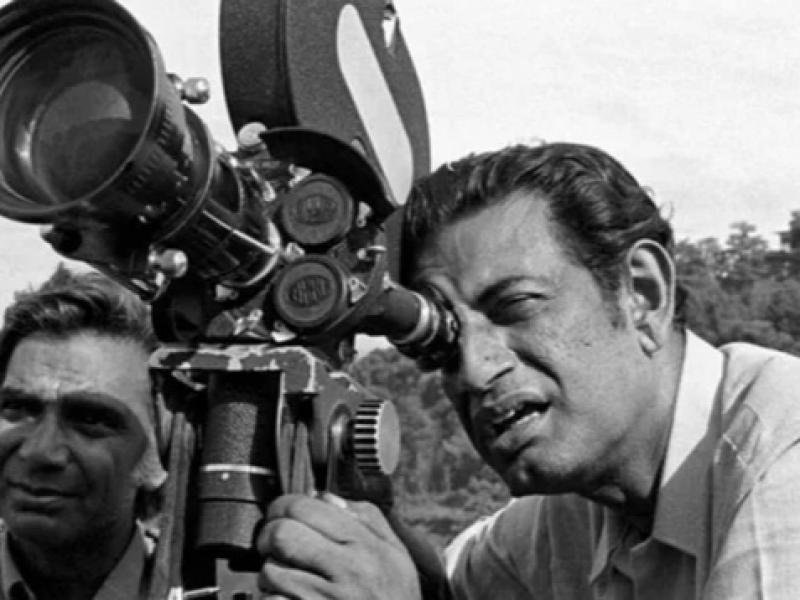
Image: Collected
Satyajit Ray’s enduring work places Bengal at the center of literary and cinematic worlds
Satyajit Ray (May 2, 1921–April 23, 1992), a towering figure in Indian arts, is honoured for his vast contributions as a filmmaker, writer and illustrator. Ray’s body of work marries keen intellect with imaginative vision. Grounded in a subtle reading of human nature, social textures and cultural detail, his storytelling captures everyday life with rare authenticity. Whether he portrays the quiet struggles of ordinary people or the tangled web of human relationships, Ray’s narratives speak across generations. His films invite viewers to inhabit convincingly drawn worlds through careful observation, layered character work and an eye for small but telling detail.
Yet Ray’s art moves beyond plain realism; he often weaves knowledge and dream into his cinema. Myth, folklore and symbolism hover at the edges of many of his films, blurring the line between the visible world and the inner life. That fusion of the tangible and the elusive gives his work a timeless, contemplative quality that asks audiences to probe deeper questions about existence. Ray’s oeuvre stands as proof of storytelling’s power to reveal human complexity, and his blending of reality, insight and imagination continues to influence filmmakers and readers alike.
In Jana Aranya, Ray navigates the maze of human experience with clinical subtlety. Somnath, a gifted but disillusioned youth, becomes an emblem of the gap between ideals and harsh social realities. The film traces his moral compromises amid middle-class Bengali expectations, ultimately presenting resilience as a hard-won response to systemic pressures.
Ray’s first film, Pather Panchali—adapted from Bibhutibhushan Bandyopadhyay and released on August 26, 1955—remains a landmark. The Apu trilogy (Pather Panchali, Aparajito, Apur Sansar) follows Apu from childhood through adolescence to adulthood, mapping a life with compassion and restraint. Pather Panchali won wide acclaim, collecting awards across 17 countries and earning the Cannes jury’s "Best Human Document" in 1956, along with national honours. The trilogy’s portrait of ordinary Bengal endures as one of cinema’s great human chronicles.
Though not a film title, Ray’s Feluda series is woven into Bengali cultural memory. The detective Pradosh Chandra Mitra—Feluda—first appeared in December 1965 in Sandesh magazine. Across some 35 complete and a few unfinished stories, Feluda, accompanied by cousin Topshe and the writer Jatayu, became an archetype of intellect and wit. Ray adapted Sonar Kella and Joy Baba Felunath for the screen, with Soumitra Chatterjee embodying the detective’s cool intelligence. Through mystery and observation, the series offers moral lessons while entertaining readers of all ages.
Nayak (1966), written and directed by Ray, is an original screenplay that won the National Film Award for Best Bengali Feature Film in 1967. Featuring Uttam Kumar and Sharmila Tagore, the film juxtaposes a star’s inner dreams with public realities, examining how personal and political worlds collide. Ray’s direction reveals the fragile architecture of identity beneath celebrity.
Mahanagar (1963), adapted from Narendranath Mitra’s Avataranika, explores middle-class urban life amid the 1960s’ accelerating changes. Ray studies shifting aspirations and anxieties as characters negotiate new social roles. As elsewhere, his work threads together the concrete pressures of day-to-day life and the quieter, often conflicted dreams that sustain people.
Ashani Sanket (1973), adapted from Bibhutibhushan Bandyopadhyay, confronts the 1943 Bengal famine with unflinching clarity. Set in a rural landscape under duress, the film’s authenticity and moral urgency earned it a place in The New York Times Guide to the Best 1,000 Movies Ever Made. Ray’s attention to social detail turns catastrophe into a moving study of community and survival.
Hirak Rajar Deshe, part of the Goopy Gyne Bagha Byne cycle, stands out as a political fable. Framed as a fantastical tale in a royal court, the film uses allegory to critique power, oppression and resistance. Ray stages every character as a symbol, inviting reflection on governance, freedom and collective conscience.
Before his filmmaking fame, Ray worked at D J Keymer & Co. as an illustrator and later art director, producing memorable covers for books ranging from Pather Panchali to Maneater of Kumaon and Discovery of India. Painting remained a creative outlet even after he turned to cinema; he described scenes from his films in watercolor and sketches, sometimes revealing unexpected truths about people he portrayed. In 1961 he co-edited Sandesh with Subhash Mukhopadhyay, renewing his engagement with illustration. Ray’s visual work—posters, covers and paintings—demonstrates the same blend of realism, dream and erudition found in his films.
There will likely never be another artist who so deftly probed the human mind while fusing reality, imagination and learning. Through cinema, writing and art, Satyajit Ray left a singular legacy: a harmonious body of work that continues to illuminate the contours of human life.