

- Over 150 garment factories shut in Ashulia amid labour unrest, 50 injured |
- Scaloni to stay on as Argentina head coach until 2030 |
- Spain overtakes Germany as top EU market for Bangladeshi apparel |
- Trump sidelines Vance from Iran talks, says no need to negotiate |
- Information Commission to remain independent, neutral: CIC Nahreen |
Is Smoking Making a Comeback?
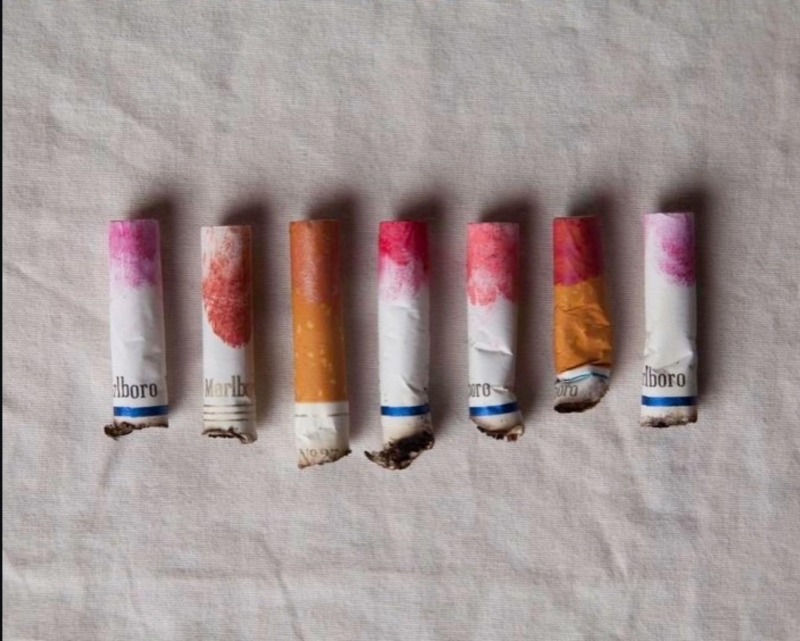
Image: Collected
Cigarettes are becoming visible again in films, fashion campaigns, celebrity photographs, and social-media posts. After years in which smoking was increasingly pushed out of public spaces and treated as socially unacceptable, cigarettes are once more being used as a symbol of rebellion, glamour, nostalgia, and effortless cool. This revival is most obvious in pop culture, where smoking scenes and images of celebrities with cigarettes are being presented as stylish rather than dangerous.
The appeal is partly rooted in nostalgia. Many young people associate cigarettes with older films, 1980s and 1990s fashion, and the party culture of the early 2000s. When these eras return through music, clothing, and online aesthetics, smoking often returns with them as a visual accessory. The cigarette becomes less a product than a prop: something that makes an image look cinematic, edgy, or sophisticated.
It's Culture, Not Behaviour
Although smoking appears to be returning in popular culture, the evidence does not yet show a major return to smoking as a widespread habit. In the United States, adult smoking remains near historic lows, and youth cigarette use is also low. Public-health experts caution that the current trend is more of a cultural revival than a proven increase in the number of people who smoke regularly.
This distinction is important. A cigarette may be appearing frequently on magazine covers, red carpets, and social-media feeds, but that does not automatically mean smoking rates are rising. The current moment may reflect a renewed fascination with the image of smoking rather than a genuine reversal of decades of progress in reducing tobacco use.
Why It Feels Appealing
Smoking has long carried symbolic meaning. For some people, it represents independence, maturity, rebellion, confidence, or belonging to a particular social scene. These associations can be especially powerful among young people, who may see smoking as a way to signal that they are grown up or different from mainstream expectations.
Social media makes these associations stronger. A carefully styled photograph can make smoking look glamorous while leaving out addiction, expense, unpleasant smell, and serious health risks. Repeated exposure to images that present cigarettes as fashionable can make smoking seem more desirable and less harmful, particularly to audiences who are still forming their attitudes toward tobacco.
The Risks Have Not Changed
The central problem is that cigarettes have not become safer simply because they have become fashionable again. Smoking remains a major preventable cause of disease and premature death. It is closely linked to coronary heart disease, emphysema, lung cancer, and many other serious health conditions.
Nicotine addiction also makes quitting difficult, especially for people who begin smoking young. The longer a person smokes, the more entrenched the habit can become and the greater the risk of long-term damage. Health professionals therefore warn that anyone who has recently started smoking should try to quit as soon as possible, rather than assuming occasional or social smoking is harmless.
Vaping Complicates the Picture
The larger concern may not be a sudden mass return to cigarettes, but the continuing normalization of nicotine. In Canada, for example, cigarette smoking among young people has declined since the early 2000s, yet about one-quarter of high-school students report vaping daily. This shows that nicotine use can remain common even when traditional cigarette smoking is less popular.
Vaping may look modern rather than retro, but it can still create nicotine dependence and preserve familiar tobacco-related rituals. If cigarettes regain cultural appeal at the same time, young people may be exposed to nicotine in more than one form. The danger is not only cigarette smoking itself, but the broader return of nicotine as something fashionable and socially acceptable.
What Should Change
A cultural comeback does not mean public health should surrender to it. Governments, schools, media platforms, and health organizations can respond by limiting tobacco marketing, strengthening smoke-free policies, maintaining high taxes on tobacco products, and continuing plain packaging and warning labels. These measures help prevent smoking from being repackaged as harmless style.
It is also important to address the reasons people smoke in the first place. Stress, burnout, loneliness, social pressure, and economic insecurity can all make cigarettes feel like a source of comfort or identity. Effective anti-smoking efforts should therefore combine regulation with accessible support for people who want to quit, including counselling, nicotine-replacement therapy, and quitlines.
The Bottom Line
Smoking is making a comeback in culture, but not yet clearly in behaviour. Cigarettes may be regaining a place in fashion, film, and social media, but their health risks remain exactly what they were decades ago. A cigarette in a stylish photograph is still addictive, harmful, and expensive, regardless of how carefully it is framed.
The real danger is not that everyone will suddenly begin smoking again. It is that a new generation may begin to see a highly addictive and disease-causing product as harmless, fashionable, or cool. Preventing that shift requires reminding people that the glamour of smoking is an image, while its consequences are real.