

- Oil Shock Sends Asian Markets Lower as Middle East Conflict Threatens Global Shipping |
- Trump Links Iran War to US Midterms, Backs United Ireland |
- PM Tarique Rahman Seeks Public Cooperation to Tackle Nationwide Dengue Outbreak |
- Jatiyatabadi Mahila Dal Vows to Lead Fight Against Rape, Violence Against Women and Children |
- 'Honorable' Dropped: PM Starts Implementing Decision from His Own Office |
Climate Change Doubled Likelihood of Canada's Extreme Wildfires: Study
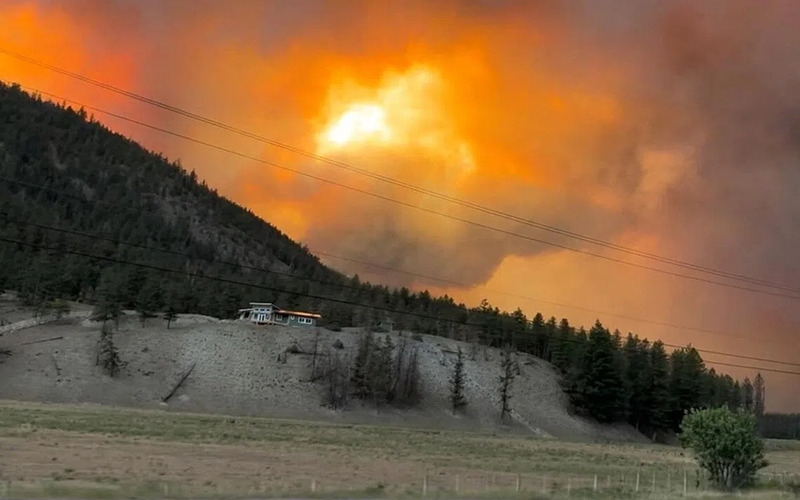
Image- Collected
Human-induced climate change made the extreme fire conditions behind this year's Canadian wildfires about twice as likely, according to a study released on Thursday.
Although Canada's wildfire season began with lower-than-normal activity, prolonged hot and dry weather since July has accelerated the spread of fires, with Ontario and the Northwest Territories among the hardest-hit regions.
More than 3.8 million hectares (9.4 million acres) have burned so far this year, forcing thousands of people from their homes and exposing millions to hazardous wildfire smoke.
Researchers from the World Weather Attribution (WWA) group assessed the impact of climate change by comparing current climate conditions with a hypothetical world unaffected by the approximately 1.4°C of global warming since the pre-industrial era.
The analysis focused on the most extreme seven-day and 30-day periods of fire weather in Ontario and the Northwest Territories. It concluded that climate change caused by human activity made such conditions roughly twice as likely to occur.
According to the WWA, fire weather of the intensity experienced this year is no longer considered rare. In today's climate, similar conditions are expected every two to six years in the Northwest Territories and every six to 15 years in Ontario. Without climate change, such events would have been expected only about once every 40 years.
Lead author Theodore Keeping of Imperial College, London, said the scale and intensity of Canadian wildfires have changed significantly since 2023. He noted that the broad geographic spread of the fires demonstrates that preparedness measures alone are insufficient and stressed the need to reduce dependence on fossil fuels to limit the worsening impacts of climate change.
The study also highlighted that rising global temperatures, prolonged droughts and drier atmospheric conditions are increasing the frequency and intensity of wildfires. It warned that the fires themselves release vast amounts of carbon dioxide, creating a feedback loop that further accelerates global warming.