

- Oil Shock Sends Asian Markets Lower as Middle East Conflict Threatens Global Shipping |
- Trump Links Iran War to US Midterms, Backs United Ireland |
- PM Tarique Rahman Seeks Public Cooperation to Tackle Nationwide Dengue Outbreak |
- Jatiyatabadi Mahila Dal Vows to Lead Fight Against Rape, Violence Against Women and Children |
- 'Honorable' Dropped: PM Starts Implementing Decision from His Own Office |
Another Narrative of August 5: Uncovering the Bloodshed Behind the Uprising
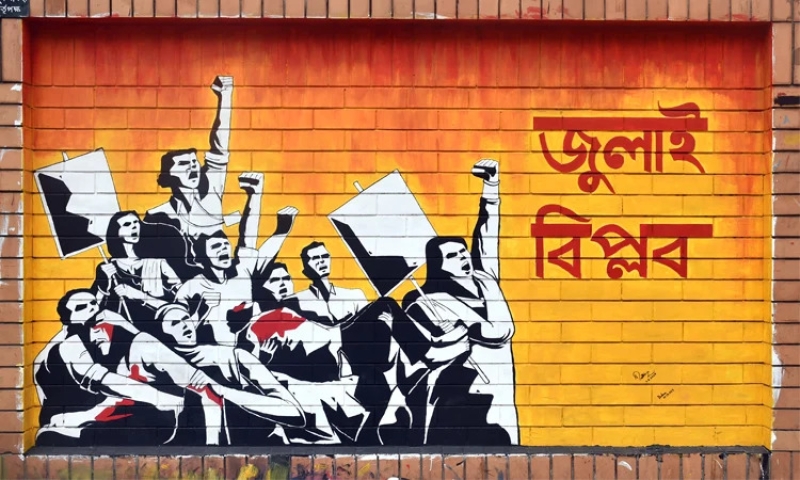
Image- Collected
August 5, 2024, will remain one of the most controversial and multi-dimensional events in Bangladesh's political history. On that day, the long-ruling Awami League government fell in the face of a student-led mass movement. For one side, it marked the victory of a popular uprising; for the other, it represented the fall of an elected government, the breakdown of state stability, and a tragic chapter marked by widespread loss of life.
No historical event can be fully understood from a single perspective. Alongside the demands and frustrations of the protesters, August 5 also carries the memories of law enforcement personnel who lost their lives, attacks on government installations, violent incidents, and a serious crisis within the state's institutions.
According to Awami League leaders and activists, many police officers became victims of brutal attacks during the events of August 5. They argue that numerous officers who were carrying out their duties on behalf of the state lost their lives. For this reason, the Awami League commemorates the day as "Police Martyrs' Day," highlighting the sacrifices made by members of the law enforcement agencies.
In any state, the police and security forces are institutions of the state rather than of any political party. The death of an officer while performing official duties is not only the loss of an individual but also an attack on the state's institutional framework. Remembering the fallen officers and expressing solidarity with their families should therefore not be overlooked.
The Awami League has consistently maintained that the violence that spread during the final phase of the 2024 movement was not merely a political transition. According to the party, it also involved the destruction of state property, growing insecurity among ordinary citizens, and a serious deterioration in law and order. They argue that violence carried out in the name of political change can never represent the ideals of democracy.
At the same time, it is equally true that every mass movement is shaped by public grievances, expectations, and political realities. It is the responsibility of the state to impartially investigate the allegations, losses, and facts surrounding all sides of such events. History does not belong to any single political party; it belongs to the people.
Today, two distinct memories of August 5 exist in Bangladesh. One side views it as the beginning of a new political era, while the other sees it as a profound wound inflicted upon the state. This divided collective memory remains a significant challenge for Bangladesh's future.
Rather than suppressing political opponents, the primary objective of a democratic state should be to uncover the truth and uphold the rule of law. Whether the victims were students, ordinary citizens, or police officers, every human life holds equal value.
The lesson of August 5 should be that political disagreements must never descend into violence. Protecting democracy requires dialogue, tolerance, and respect for the will of the people.
History ultimately delivers its own judgment. Therefore, August 5 should be remembered not solely as a day of victory or defeat, but as a bloody chapter from which Bangladesh must draw lessons for the future.
August 5, 2024, will remain one of the most controversial and multi-dimensional events in Bangladesh's political history. On that day, the long-ruling Awami League government fell in the face of a student-led mass movement. For one side, it marked the victory of a popular uprising; for the other, it represented the fall of an elected government, the breakdown of state stability, and a tragic chapter marked by widespread loss of life.
No historical event can be fully understood from a single perspective. Alongside the demands and frustrations of the protesters, August 5 also carries the memories of law enforcement personnel who lost their lives, attacks on government installations, violent incidents, and a serious crisis within the state's institutions.
According to Awami League leaders and activists, many police officers became victims of brutal attacks during the events of August 5. They argue that numerous officers who were carrying out their duties on behalf of the state lost their lives. For this reason, the Awami League commemorates the day as "Police Martyrs' Day," highlighting the sacrifices made by members of the law enforcement agencies.
In any state, the police and security forces are institutions of the state rather than of any political party. The death of an officer while performing official duties is not only the loss of an individual but also an attack on the state's institutional framework. Remembering the fallen officers and expressing solidarity with their families should therefore not be overlooked.
The Awami League has consistently maintained that the violence that spread during the final phase of the 2024 movement was not merely a political transition. According to the party, it also involved the destruction of state property, growing insecurity among ordinary citizens, and a serious deterioration in law and order. They argue that violence carried out in the name of political change can never represent the ideals of democracy.
At the same time, it is equally true that every mass movement is shaped by public grievances, expectations, and political realities. It is the responsibility of the state to impartially investigate the allegations, losses, and facts surrounding all sides of such events. History does not belong to any single political party; it belongs to the people.
Today, two distinct memories of August 5 exist in Bangladesh. One side views it as the beginning of a new political era, while the other sees it as a profound wound inflicted upon the state. This divided collective memory remains a significant challenge for Bangladesh's future.
Rather than suppressing political opponents, the primary objective of a democratic state should be to uncover the truth and uphold the rule of law. Whether the victims were students, ordinary citizens, or police officers, every human life holds equal value.
The lesson of August 5 should be that political disagreements must never descend into violence. Protecting democracy requires dialogue, tolerance, and respect for the will of the people.
History ultimately delivers its own judgment. Therefore, August 5 should be remembered not solely as a day of victory or defeat, but as a bloody chapter from which Bangladesh must draw lessons for the future.