

- Oil Shock Sends Asian Markets Lower as Middle East Conflict Threatens Global Shipping |
- Trump Links Iran War to US Midterms, Backs United Ireland |
- PM Tarique Rahman Seeks Public Cooperation to Tackle Nationwide Dengue Outbreak |
- Jatiyatabadi Mahila Dal Vows to Lead Fight Against Rape, Violence Against Women and Children |
- 'Honorable' Dropped: PM Starts Implementing Decision from His Own Office |
Oil Shock Sends Asian Markets Lower as Middle East Conflict Threatens Global Shipping
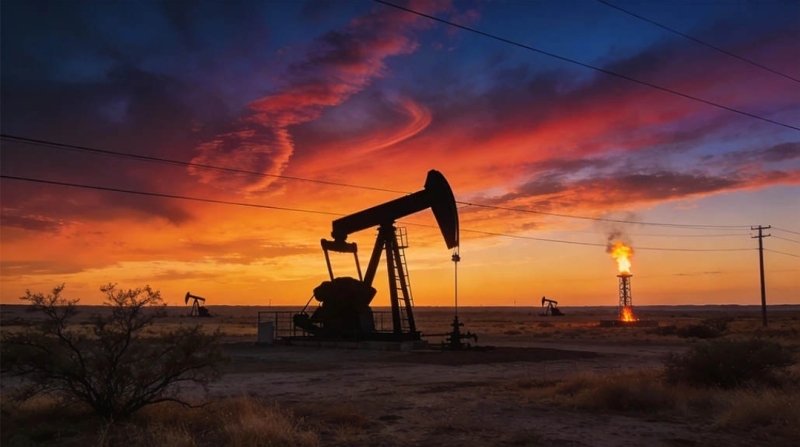
Image: Collected
Asian stock markets came under heavy pressure this week as escalating conflict in the Middle East disrupted key shipping routes, pushed crude oil prices above $107 a barrel and revived fears that central banks may be forced to raise interest rates to contain inflation.
Brent crude briefly climbed to nearly $110 a barrel after surging about 6% in a single session. The benchmark later retreated as investors took profits, but it remained around $107 and was on track for an approximately 11% weekly gain. The sharp increase marked one of the most turbulent weeks for energy markets in recent months.
The rise in oil prices has intensified concerns about fuel costs, transportation expenses and consumer inflation across economies that depend heavily on Middle Eastern energy supplies. Investors are now reassessing expectations for monetary policy, particularly in the United States, where higher energy prices could complicate efforts to control inflation.
Shipping routes face growing risks
The market turmoil has been amplified by developments around two of the world’s most important maritime chokepoints: the Strait of Hormuz and the Bab el-Mandeb Strait.
In Yemen, Iran-aligned Houthi forces reportedly captured the Red Sea port city of Mocha and advanced toward strategic islands near the Bab el-Mandeb Strait. The waterway links the Red Sea with the Gulf of Aden and forms a major trade route between Asia, Europe and the Middle East.
Any prolonged disruption in the area could force shipping companies to reroute vessels around the Cape of Good Hope, adding thousands of kilometres to journeys and increasing fuel, insurance and delivery costs. The Houthi advance has therefore raised concerns not only about oil supplies but also about global trade more broadly.
The Strait of Hormuz remains an even more significant concern for energy markets. The narrow passage connects the Persian Gulf with the Gulf of Oman and is a crucial export route for crude oil from major producers, including Saudi Arabia, Iraq, Kuwait, the United Arab Emirates and Qatar.
Reports of attacks involving vessels and military assets in the Gulf have heightened fears that further escalation could restrict tanker traffic through the strait. Analysts warn that even a temporary disruption could have an outsized effect on international energy prices because alternative export routes have limited capacity.
Freight costs reach record levels
The security threats have already affected the global tanker market. Freight rates for supertankers travelling from the Middle East to China reportedly rose to almost $800,000 per day, a record level according to Bloomberg.
Higher freight costs add to the final price of imported oil and increase the financial pressure on refiners, shipping companies and energy-consuming industries. If the disruption continues, the impact could spread to airline tickets, electricity generation, manufacturing and food distribution.
“Markets are pricing in the possibility that this conflict will last longer than anticipated,” PVM analyst John Evans said. “If oil supply and exports are diminished, prices will remain elevated.”
The United States Energy Information Administration reported that American crude inventories fell by only about 391,000 barrels in the week ending September 4, far below expectations for a decline of roughly 1.6 million barrels. The smaller-than-expected draw helped moderate some concerns about immediate supply shortages, but it did little to offset the broader geopolitical risk.
Asian markets retreat
Equities across Asia fell as investors reacted to the combination of higher oil prices, rising government bond yields and renewed expectations of tighter monetary policy.
Japan’s Nikkei 225 fell by roughly 2%, slipping below the 63,500 level. South Korea’s Kospi declined about 1.8%, while Hong Kong’s Hang Seng Index dropped around 1%. India’s Sensex also weakened, losing nearly 600 points at the open.
Energy-importing economies are particularly vulnerable because expensive crude can widen trade deficits, weaken local currencies and reduce household purchasing power. Higher fuel prices can also raise operating costs for companies, placing pressure on profit margins.
The selloff extended beyond equities. Government bond prices fell sharply, sending yields higher as investors anticipated stronger inflation and increased borrowing needs. The U.S. 10-year Treasury yield reached a level not seen since October 2023, while the 30-year yield climbed to approximately 5.34%.
Rate-hike fears return
The oil shock has significantly changed expectations for the Federal Reserve’s next policy decision. Financial markets were pricing in about a 64% probability of a rate increase at the Fed’s upcoming meeting, compared with approximately 41.5% on September 3.
Investors are concerned that a sustained rise in crude prices could feed into headline inflation and eventually influence core prices through transport, production and distribution costs. Central banks may then face pressure to keep interest rates higher for longer—or raise them further—even as weaker stock markets and softer economic activity increase recession risks.
The policy dilemma is particularly difficult because monetary tightening cannot directly resolve a geopolitical supply shock. Higher borrowing costs may reduce demand, but they cannot quickly restore disrupted shipping routes or replace lost oil exports.
Oil prices remain volatile
Despite the wider supply concerns, crude prices fell sharply at the end of the week as traders locked in profits after the rally. West Texas Intermediate crude dropped more than 4% in one session and traded near $96 a barrel, demonstrating the market’s extreme volatility.
Analysts said the pullback did not necessarily signal that the underlying risks had disappeared. Instead, it reflected a temporary adjustment after one of the strongest weekly gains in recent months.
The next direction for oil prices will depend largely on whether attacks continue, whether commercial vessels can safely pass through the Hormuz and Bab el-Mandeb straits, and whether diplomatic efforts can prevent the conflict from spreading.
For governments and businesses across Asia, the immediate concern is the cost of energy. A prolonged disruption could raise import bills, weaken currencies and increase inflationary pressure, while households may face higher prices for fuel, food and basic goods.
Until shipping through the region becomes more secure, financial markets are likely to remain highly sensitive to every military development, tanker incident and change in the flow of crude exports.