

- Oil Shock Sends Asian Markets Lower as Middle East Conflict Threatens Global Shipping |
- Trump Links Iran War to US Midterms, Backs United Ireland |
- PM Tarique Rahman Seeks Public Cooperation to Tackle Nationwide Dengue Outbreak |
- Jatiyatabadi Mahila Dal Vows to Lead Fight Against Rape, Violence Against Women and Children |
- 'Honorable' Dropped: PM Starts Implementing Decision from His Own Office |
Preliminary Hajj Registration to Begin Monday
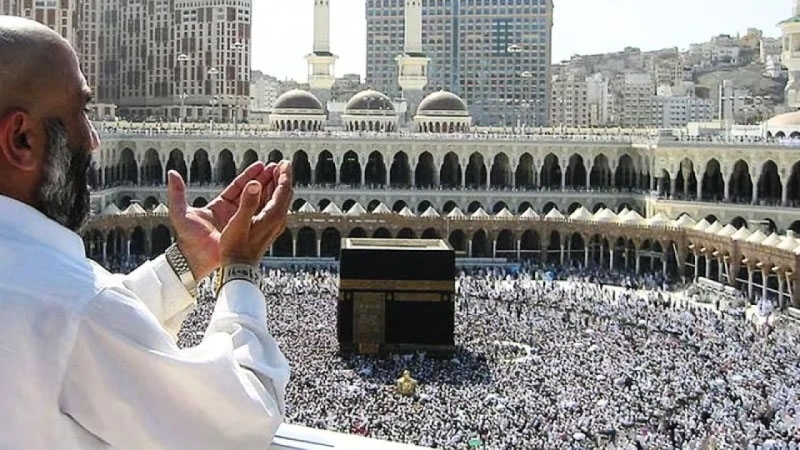
Photo: Collected
Preliminary registration for Hajj 2027 will begin tomorrow, Monday (July 27), and continue until September 24.
Those wishing to perform Hajj must complete their preliminary registration within this period. Anyone can register through the e-Hajj system. Final registration will require payment of the prescribed fees.
The Ministry of Religious Affairs announced the schedule in line with the roadmap for Hajj operations issued by Saudi Arabia’s Ministry of Hajj and Umrah.
Pilgrims can complete preliminary registration through either the government or private channel by depositing Tk 350,000. Those who complete preliminary registration must pay the remaining amount of their selected package and complete final registration by December 10 this year. Before preliminary registration, prospective pilgrims must also complete pre-registration by paying Tk 30,000.
Under the government channel, applicants can create a user account on the e-Hajj system at hajj.gov.bd and register themselves. Registration will also be available at Union Digital Centres, divisional and district offices of the Islamic Foundation, district and upazila model mosques, the Islamic Foundation’s Baitul Mukarram office, and the Dhaka Hajj Office.
Government-channel pilgrims must deposit the required amount through a voucher at any branch of Sonali Bank to complete their preliminary registration.
Meanwhile, pilgrims travelling through the private channel must deposit the required amount into the designated bank account of their Hajj agency at a bank involved in Hajj operations. Information about the agency’s bank account will be available on the Hajj portal under the profile of the respective agency.
People under the age of 15 will not be allowed to perform Hajj. In addition, individuals suffering from serious illnesses, including heart, lung, liver or kidney diseases, neurological or mental disorders, and dementia, will not be eligible. Cancer patients undergoing chemotherapy, biological therapy or radiotherapy will also be barred from performing Hajj.
People suffering from active infectious diseases that pose a threat to public health, including tuberculosis and haemorrhagic fever, will also be ineligible. Women in the final two months of pregnancy or those with high-risk pregnancies will not be issued a fitness certificate for Hajj.
During preliminary registration, pilgrims must select the district where they will receive mandatory training and vaccinations, the type of Hajj they intend to perform, and their Hajj package. They will also be required to have a passport valid until at least December 31, 2027.