

- Oil Shock Sends Asian Markets Lower as Middle East Conflict Threatens Global Shipping |
- Trump Links Iran War to US Midterms, Backs United Ireland |
- PM Tarique Rahman Seeks Public Cooperation to Tackle Nationwide Dengue Outbreak |
- Jatiyatabadi Mahila Dal Vows to Lead Fight Against Rape, Violence Against Women and Children |
- 'Honorable' Dropped: PM Starts Implementing Decision from His Own Office |
Two Years After the July Uprising: A Legacy Still Unfolding
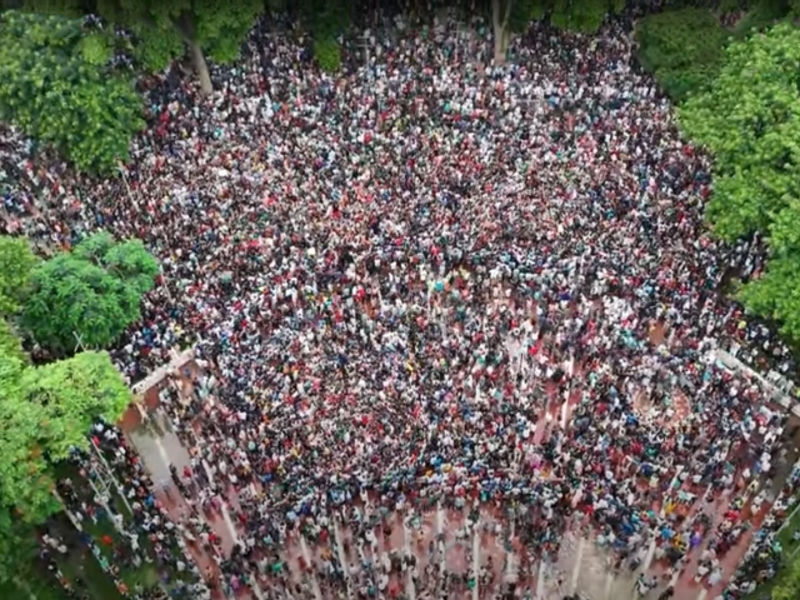
Image: Collected
Two years have passed since the July Uprising, a movement that reshaped Bangladesh's political landscape and became one of the defining moments in the country's contemporary history. What began as a student-led protest quickly evolved into a nationwide movement, drawing participation from people of different ages and backgrounds who demanded accountability, justice, and meaningful political change.
The events of July demonstrated the power of collective action. Universities, colleges, and public spaces became centres of debate and protest, while social media played a significant role in mobilising citizens and sharing developments in real time. As the movement grew, it attracted widespread national and international attention, highlighting the aspirations of a generation seeking greater transparency, fairness, and democratic participation.
The aftermath of the uprising brought significant political developments. New leadership, policy debates, and institutional reforms emerged as the country sought to address the issues raised during the protests. While supporters viewed these changes as an important step toward a more accountable system, others argued that many of the movement's original goals remain unfinished, particularly in areas such as governance, economic opportunity, and institutional reform.
Two years later, the legacy of the July Uprising continues to shape public discourse. For many young Bangladeshis, it serves as a reminder that civic engagement can influence the nation's future. At the same time, the anniversary has prompted reflection on the responsibilities that accompany political change. Sustaining reform requires not only public participation but also strong institutions, constructive dialogue, and respect for democratic processes.
The uprising also left a lasting cultural impact. Books, documentaries, photographs, and personal accounts have preserved the stories of those who participated, ensuring that future generations can understand both the hopes and the sacrifices associated with the movement. These narratives have become part of Bangladesh's evolving national memory.
As Bangladesh marks the second anniversary of the July Uprising, the country stands at an important crossroads. The events of July are no longer only a chapter in recent history—they are a continuing reference point for discussions about governance, citizenship, and national development. Whether the aspirations that inspired the movement are fully realised will depend on the commitment of both leaders and citizens in the years ahead.
The story of the July Uprising is therefore not only about what happened two years ago. It is also about the ongoing challenge of transforming public aspirations into lasting progress. Its legacy continues to influence Bangladesh's political conversation, reminding the nation that meaningful change is measured not only by historic moments but by the enduring efforts that follow them.