

- Oil Shock Sends Asian Markets Lower as Middle East Conflict Threatens Global Shipping |
- Trump Links Iran War to US Midterms, Backs United Ireland |
- PM Tarique Rahman Seeks Public Cooperation to Tackle Nationwide Dengue Outbreak |
- Jatiyatabadi Mahila Dal Vows to Lead Fight Against Rape, Violence Against Women and Children |
- 'Honorable' Dropped: PM Starts Implementing Decision from His Own Office |
Mirza Fakhrul elected Bangladesh President after five decades in politics
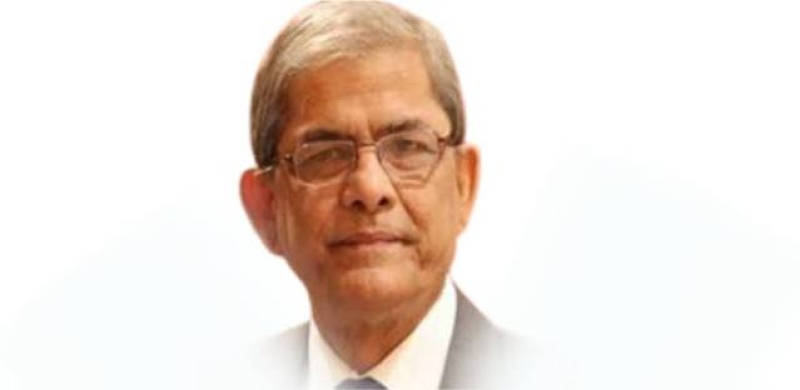
Image- Collected
Bangladesh’s Parliament today elected veteran politician Mirza Fakhrul Islam Alamgir as the country’s 23rd President, marking the culmination of a political career that began more than five decades ago as a left-leaning student activist.
The 78-year-old Alamgir was serving as Local Government, Rural Development and Cooperatives (LGRD) Minister and secretary general of the Bangladesh Nationalist Party (BNP) before being elected to the largely ceremonial post under Bangladesh’s parliamentary system.
Before joining the centre-right BNP, Alamgir worked in government from 1972 to 1986, including as an economics teacher under the education cadre of the civil service.
During his student years at Dhaka University, he joined the left-leaning East Pakistan Students Union (EPSU) and became president of its university unit during the 1969 mass uprising against the Pakistani regime. He later briefly entered national politics through Maulana Abdul Hamid Khan Bhashani’s National Awami Party (NAP).
During the 1971 Liberation War, Alamgir emerged as an organiser of left-leaning freedom fighters and took refuge in India.
After independence, he joined the teaching profession in 1972 and taught at several government colleges, including Dhaka College. He also served as deputy director of the Directorate of Inspection and Audit, private secretary to then Deputy Prime Minister S A Bari under President Ziaur Rahman, and worked with the UNESCO National Commission.
Alamgir left government service in 1986 to enter mainstream politics. In 1988, he was elected chairman, now known as mayor, of the municipality in his hometown Thakurgaon as an independent candidate. He joined the BNP in the early 1990s.
Born on January 26, 1948, in Thakurgaon’s Kalibari area, Alamgir is the son of Mirza Ruhul Amin, a prominent Muslim League leader and former member of the East Pakistan Provincial Assembly.
He joined the BNP during the mass movement against the autocratic regime of then president Hussain Muhammad Ershad.
In 2011, then BNP chairperson and former prime minister Khaleda Zia appointed Alamgir acting secretary general of the party. He was given the permanent position on March 30, 2016, becoming the party’s longest-serving secretary general until his election as president.
His tenure coincided with one of the most difficult periods in BNP history, as the party faced prolonged political pressure and repression during the Awami League government. Khaleda Zia was imprisoned during this period and later became ill, while her son and current Prime Minister Tarique Rahman had earlier gone into exile following the military-backed interim government of 2008.
Alamgir remained a prominent face of the BNP during the difficult period, helping steer the party under the guidance of its acting chairman in London. He himself was imprisoned three times.
Before becoming secretary general, he held several positions within the BNP, including membership of its executive committee and senior joint secretary general. He also served for a long period as first vice-president and president of the party’s farmers’ wing, Jatiyatabadi Krishak Dal.
Alamgir was elected to parliament three times. He first won in the 2001 election, when the BNP came to power, and served as state minister for agriculture and later as state minister for civil aviation and tourism.
He was elected to parliament again from a Bogra constituency in the controversial 2018 election under the Awami League government. However, following a party decision, he declined to take the oath as an MP, while five other BNP lawmakers took their seats and later resigned in 2022 at the party’s direction.
After the February 2026 election, in which the BNP secured a two-thirds majority, Alamgir joined Prime Minister Tarique Rahman’s government as LGRD and Cooperatives Minister.
His election as president required him to sever his ties with the BNP in accordance with the Constitution. The ceremony was attended by BNP Chairman Tarique Rahman.
Alamgir is married to Rahat Ara Begum, who studied at Calcutta University and later worked for private insurance companies. The couple has two daughters, both of whom are involved in teaching. His elder daughter is a postdoctoral fellow in Sydney, Australia, while his younger daughter teaches at an English-medium school in Dhaka.
Throughout his long political career, Alamgir earned a reputation as a moderate and decent politician. He was privately praised even by political opponents, including leaders and activists of the Awami League.
Political analysts and politicians, including BNP leaders, welcomed his election as president, highlighting his role during the party’s difficult years and his inclusive approach and liberal political outlook.