

- Zelenskyy warns Starshield limits are hindering drone interceptions |
- Govt considers revamping school food distribution system |
- Service tenure expiry leads to retirement of five BAF officers |
- HSC supplementary exams scheduled to begin on December 1 |
- US ambassador meets Indian High Commissioner amid political uncertainty |
Dr Zubaida Rahman calls for turning waste into energy and economic opportunities
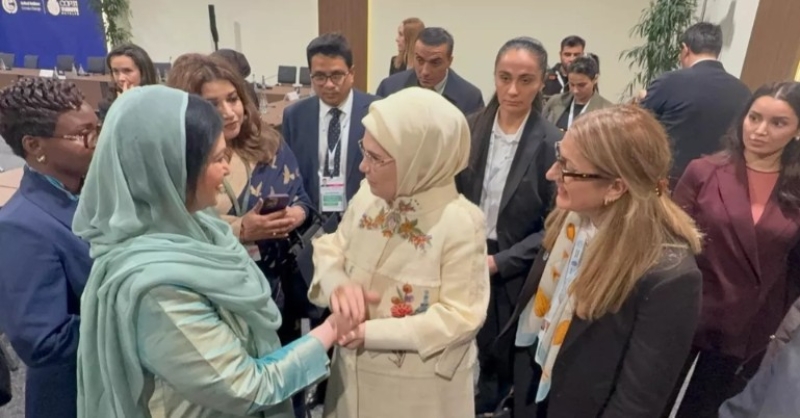
Image- Collected
Dr Zubaida Rahman, spouse of Prime Minister Tarique Rahman, has called for transforming waste into valuable resources, clean energy and opportunities for economic growth.
Speaking at a high-level meeting of spouses of heads of state and government on the sidelines of the UN Climate Change Conference (COP31) on Wednesday, she stressed that waste should be utilised rather than discarded.
She expressed Bangladesh's support for the Global Zero Waste Alliance, saying its objectives aligned with the government's vision of a clean environment, healthy population and sustainable future.
Dr Zubaida said the government was promoting waste reduction, reuse and recycling while strengthening waste segregation and safe disposal systems under the Solid Waste Management Rules.
Under Bangladesh's Third Nationally Determined Contribution (NDC 3.0), the country aims to reduce greenhouse gas emissions from the waste sector by 1.78 million tonnes of carbon dioxide equivalent by 2035.
She highlighted several priority initiatives, including recycling, composting, landfill gas recovery, waste-to-energy generation, wastewater treatment and safe disposal of medical waste.
Referring to a major waste-to-energy project planned for Dhaka, she said it would process 3,000 tonnes of household waste daily to generate 42.5 megawatts of electricity. Similar projects are also planned for other major cities.
She also highlighted ongoing efforts to clean water bodies, reduce plastic pollution and promote jute products as environmentally friendly alternatives to plastic.
As a signatory to the Global Methane Pledge, Bangladesh is also encouraging climate-friendly agriculture, improved rice cultivation and the production of organic fertiliser and clean energy from organic waste.
Emphasising international cooperation, Dr Zubaida said affordable climate finance, technology transfer and capacity building were essential to achieving a zero-waste future. She also called for greater private-sector participation and better protection for informal waste management workers.
She further stressed the importance of involving young people in environmental initiatives, saying awareness should begin at home, in educational institutions and across society.