

- Oil Shock Sends Asian Markets Lower as Middle East Conflict Threatens Global Shipping |
- Trump Links Iran War to US Midterms, Backs United Ireland |
- PM Tarique Rahman Seeks Public Cooperation to Tackle Nationwide Dengue Outbreak |
- Jatiyatabadi Mahila Dal Vows to Lead Fight Against Rape, Violence Against Women and Children |
- 'Honorable' Dropped: PM Starts Implementing Decision from His Own Office |
The Punisher: Marvel’s Relentless War on Crime Across Comics, Movies and Television
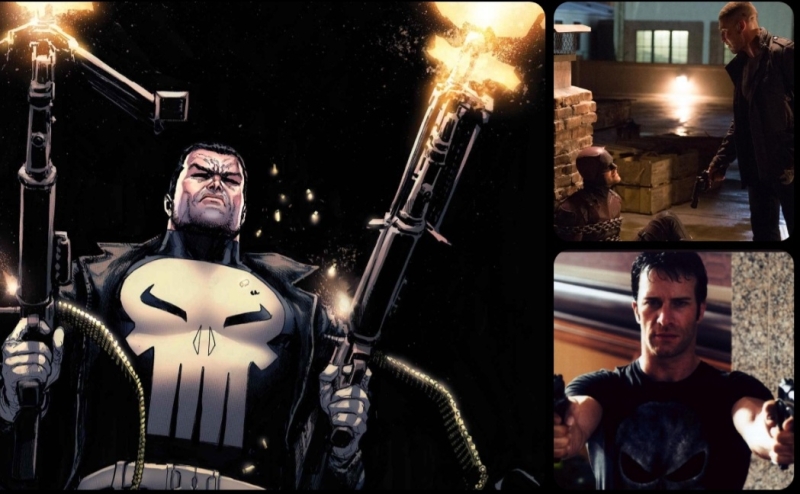
Image: Collected
Few Marvel characters embody the darker side of superhero storytelling quite like the Punisher. Unlike Spider-Man, Captain America or Iron Man, Frank Castle has no superhuman abilities, no colorful alter ego and no interest in becoming a traditional hero. His defining weapon is his determination—and his willingness to cross lines that most superheroes refuse to approach.
Since his debut in the 1970s, the Punisher has gone through numerous interpretations in comics, films and television. Each version has presented a slightly different Frank Castle, but the central idea has remained remarkably consistent: a man who loses everything and declares war on the criminals he believes the justice system cannot stop.
The Birth of Frank Castle
Punisher first appeared in The Amazing Spider-Man #129 in 1974, created by writer Gerry Conway and artists Ross Andru and John Romita Sr.
Originally, Castle was introduced as an antagonist to Spider-Man. He was convinced that Spider-Man was a dangerous criminal and pursued him alongside the criminal organization known as the Jackal.
However, the character quickly became more complicated than a simple villain.
Frank Castle was a former U.S. Marine who had served in combat. His life changed forever when his wife and children were murdered after witnessing a mob execution in New York's Central Park. Castle survived the attack, but his family did not.
Rather than accepting the loss, Castle transformed himself into the Punisher.
His mission was brutally straightforward: hunt down criminals and eliminate them.
Unlike most Marvel heroes, Castle doesn't believe that criminals should necessarily be captured and rehabilitated. His philosophy is based on permanent consequences, making him one of the most morally controversial characters in the Marvel Universe.
The Punisher in the Comics
The comics have arguably provided the greatest variety of interpretations of Frank Castle.
Early Punisher stories presented him as a violent vigilante operating within Marvel's superhero world. As his popularity grew, Marvel increasingly separated him from conventional superhero adventures and placed him in darker crime stories.
One of the most influential eras came through writers such as Garth Ennis, whose work helped redefine the character.
Ennis' The Punisher stories emphasized Castle's military background, psychological damage and obsessive commitment to his mission. Rather than portraying him simply as an action hero, these stories explored what decades of violence would actually do to a human being.
The Punisher MAX
One of the most important versions is the Punisher from Marvel's MAX imprint.
In this continuity, Frank Castle operates in a world largely disconnected from superheroes. The stories are considerably more grounded, violent and politically complicated.
Castle is portrayed as an aging war veteran who has spent decades fighting criminals. There are no supervillains or cosmic battles to distract from the central question: what happens when a man dedicates his entire existence to violence?
The MAX version is often considered one of the most sophisticated portrayals of Frank Castle because it treats his mission less like a superhero fantasy and more like a tragic obsession.
Different Comic Book Versions
The Punisher has also existed in alternate universes and unusual interpretations.
In Marvel's main continuity, Castle has occasionally interacted with characters ranging from Spider-Man and Daredevil to Wolverine and the Avengers. These encounters highlight the fundamental difference between him and traditional heroes.
He may fight alongside superheroes when their goals overlap, but Castle doesn't necessarily share their moral boundaries.
There have also been alternate versions of the character, including stories in which the Punisher becomes connected to supernatural elements or takes on radically different identities.
One particularly famous example is Franken-Castle, in which Frank Castle is transformed into a supernatural creature after being killed. The bizarre storyline demonstrates how flexible the character can be—even a grounded vigilante can be adapted to Marvel's stranger corners.
Thomas Jane's Punisher
The first major modern theatrical interpretation came with the 2004 film The Punisher, starring Thomas Jane as Frank Castle.
The film takes inspiration from several elements of the comics while creating its own version of Castle.
Jane's Frank is a former FBI agent rather than simply the traditional Marine interpretation. After his family is murdered, he returns to Tampa and begins targeting the criminals responsible.
The movie combines revenge thriller elements with comic-book action and dark humor.
Jane's performance became particularly popular among Punisher fans because he captured Castle's emotional exhaustion. This isn't a man enjoying his new life as a vigilante. He is a broken person who has decided that revenge is the only purpose he has left.
Although the film received mixed reviews upon release, Jane's interpretation developed a strong cult following.
Ray Stevenson and Punisher: War Zone
In 2008, Ray Stevenson took over the role in Punisher: War Zone.
This version moved closer to the exaggerated violence and visual style of Punisher comics.
Stevenson's Castle is physically imposing and largely silent. The movie doesn't spend as much time questioning whether Frank is justified. Instead, it embraces the character as a brutal comic-book antihero.
The film features colorful villains, extreme action and a heightened visual style that distinguishes it from Thomas Jane's more grounded interpretation.
Although War Zone struggled commercially, it later gained a dedicated cult following. Many fans appreciate it precisely because it does not attempt to turn the Punisher into a conventional superhero.
Jon Bernthal's Punisher
For many modern audiences, Jon Bernthal's portrayal is the definitive live-action Punisher.
Bernthal first appeared as Frank Castle in the second season of Daredevil before receiving his own series, The Punisher.
What made Bernthal's version particularly effective was the emotional intensity behind the violence.
His Frank Castle isn't simply angry. He's grieving, traumatized and psychologically unstable. Bernthal portrays a man who can switch from quiet vulnerability to terrifying aggression within seconds.
The television format also allowed the character to be explored more deeply than a two-hour movie.
Daredevil vs. The Punisher
One of the strongest aspects of Bernthal's introduction was his conflict with Daredevil.
Both characters operate at night and fight criminals, but their philosophies are fundamentally different.
Daredevil believes criminals should be stopped without killing them. Castle believes criminals who repeatedly hurt innocent people deserve to die.
Their conflict therefore isn't simply physical.
It is philosophical.
Daredevil asks whether justice can exist without becoming vengeance. Castle essentially responds that the distinction doesn't matter when innocent people continue to suffer.
Their arguments give the Punisher something that many action-oriented characters lack: a genuine ideological conflict with another hero.
The Punisher Television Series
The Netflix series The Punisher expanded Frank Castle's story across two seasons.
The first season focuses heavily on Castle's investigation into the conspiracy surrounding his family's death and his military past. Alongside the action, the show explores themes of trauma, friendship, corruption and the psychological consequences of war.
The second season places Castle in conflict with new enemies while introducing a younger character whose journey forces Frank to confront the possibility of becoming a protector rather than simply an executioner.
The series also gave viewers a more vulnerable version of Castle.
He occasionally smiles. He develops relationships. He helps people.
But the violence never disappears.
That contradiction is central to Bernthal's interpretation.
Why the Punisher Is Different From Other Marvel Characters
The Punisher's popularity comes partly from his simplicity.
Spider-Man asks what responsibility comes with power.
Captain America asks what it means to stand for one's principles.
Batman asks whether justice can survive without killing.
The Punisher asks a much darker question:
What if someone decides the system has failed completely?
Castle has no superpowers. He doesn't have Stark technology, magical abilities or alien weapons. His advantages are military training, intelligence, preparation and an extraordinary tolerance for pain.
That makes him feel closer to a crime-thriller protagonist than a traditional superhero.
The Skull Symbol
The Punisher's white skull logo has become one of Marvel's most recognizable symbols.
In the comics, the skull serves a practical and psychological purpose. It makes Castle visually distinctive while also intimidating his enemies.
The symbol has subsequently taken on meanings outside the fictional character, sometimes appearing in military and law-enforcement contexts and becoming controversial because of its association with violence.
Marvel has periodically modified the character's logo and presentation, reflecting the complicated relationship between the fictional Punisher and the real-world interpretations of his imagery.
The Punisher's Greatest Strength—and His Greatest Weakness
Frank Castle's greatest strength is also his greatest weakness: he never stops.
He can lose allies, weapons, money and even his life, yet he repeatedly returns to his mission.
But that obsession raises an uncomfortable question.
If Castle's entire identity depends on fighting criminals, what happens when there is no war left?
The character rarely has an easy answer.
His mission has consumed his identity to the point where returning to a normal life becomes almost impossible.
That is why the Punisher works best as a tragic character rather than simply a wish-fulfillment action hero.
From Comic Book Vigilante to Cultural Icon
Across more than five decades, the Punisher has evolved considerably.
The original comic-book vigilante became a darker antihero. The MAX series transformed him into a grounded war veteran. Thomas Jane emphasized the grieving family man. Ray Stevenson embraced the violent comic-book aesthetic. Jon Bernthal brought psychological depth and emotional intensity to the character.
Yet every version revolves around the same tragedy.
Frank Castle lost his family and never truly recovered.
Instead of rebuilding his life, he turned his grief into a permanent war.
That is ultimately what makes the Punisher such a fascinating Marvel character. He isn't powerful because he possesses extraordinary abilities. He is powerful because he refuses to stop fighting—even when the fight has consumed almost everything that remains of him.
The Punisher isn't really a story about a man who becomes a hero. It's a story about a man who loses everything and decides that vengeance will become the rest of his life.