

- Oil Shock Sends Asian Markets Lower as Middle East Conflict Threatens Global Shipping |
- Trump Links Iran War to US Midterms, Backs United Ireland |
- PM Tarique Rahman Seeks Public Cooperation to Tackle Nationwide Dengue Outbreak |
- Jatiyatabadi Mahila Dal Vows to Lead Fight Against Rape, Violence Against Women and Children |
- 'Honorable' Dropped: PM Starts Implementing Decision from His Own Office |
Zindagi Na Milegi Dobara: A Literary Celebration of Friendship, Freedom and Life
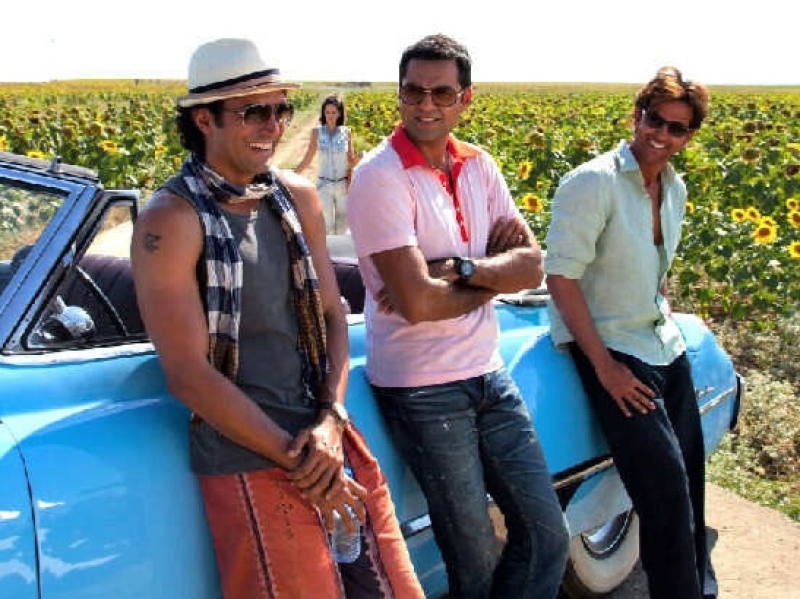
Image: Collected
Some films entertain us for a few hours, while others stay with us long after the credits roll. Zindagi Na Milegi Dobara, directed by Zoya Akhtar, belongs to the second category. Released in 2011, the Hindi film is often remembered as a story about three friends, a road trip through Spain and a series of adventures. Yet beneath its beautiful landscapes and humorous moments lies a deeply literary exploration of friendship, fear, identity, love and the meaning of living.
At its heart, the film is a journey of three childhood friends—Arjun, Kabir and Imran—who reunite for a bachelor trip. Each character represents a different way of approaching life. Arjun is consumed by his career and material ambitions. Kabir appears successful but struggles with emotional uncertainty. Imran, meanwhile, is searching for answers about his past and his relationship with his biological father. Their journey across Spain gradually becomes more than a holiday; it becomes a journey inward.
From a literary perspective, the road trip functions as a powerful metaphor. The physical movement from one destination to another mirrors the characters' emotional transformation. Every adventure forces them to confront something they have avoided in their ordinary lives. The journey therefore becomes a narrative device through which the characters discover themselves.
One of the film's strongest themes is fear. Each friend is forced to face a particular fear through an adventure. These experiences symbolise the obstacles that people carry within themselves. Fear is presented not simply as something to eliminate, but as something that must be confronted in order to understand one's own limitations and possibilities.
The film also explores the idea of time. Arjun's obsession with work reflects a modern lifestyle in which success is frequently measured through money, career and achievement. His transformation suggests that a life spent only chasing professional goals can leave little room for actually experiencing life. The famous idea behind the film's title—that life does not come with a second opportunity—gives the story an almost philosophical dimension.
Friendship is another central literary theme. The relationship between Arjun, Kabir and Imran is imperfect, but their differences make their bond believable. They argue, tease one another and occasionally misunderstand each other, yet they remain connected. Their friendship demonstrates that companionship is not about always agreeing; it is about being present when another person needs you.
The character of Laila, played by Katrina Kaif, adds another important dimension to the story. She represents freedom, spontaneity and an acceptance of the present moment. Through her interactions with Arjun, the film contrasts two different philosophies of life: one built around control and achievement, and another built around experience and openness.
Imran's search for his father gives the film a more personal and introspective storyline. His journey is not merely geographical; it is an attempt to understand his identity and reconcile himself with his past. In this sense, the film touches upon a classic literary idea: the search for one's origins can also become a search for one's self.
The Spanish setting also contributes to the film's literary quality. The landscapes, festivals, beaches and streets are not merely visual decorations. They create a world outside the characters' usual routines, allowing them to behave differently and reconsider their assumptions. The foreign landscape becomes a symbolic space where transformation is possible.
Ultimately, Zindagi Na Milegi Dobara is a story about learning to live before life passes by. Its message is not that careers, money or responsibilities are meaningless, but that they should not completely replace relationships, adventure, love and self-discovery. The film asks a simple but powerful question: if we spend our entire lives preparing for tomorrow, when do we actually live today?
More than a decade after its release, the film continues to resonate because its central concerns are universal. People still struggle with fear, ambition, relationships, expectations and the pressure to succeed. Like good literature, the film uses individual characters and a specific journey to explore experiences shared by many.
Zindagi Na Milegi Dobara therefore deserves to be viewed not only as a popular Bollywood film but also as a contemporary cultural and literary work. Its road-trip narrative becomes a metaphor for life itself—a journey filled with uncertainty, friendship, fear, love and discovery. Its lasting appeal comes from a truth that is both simple and profound: life is happening now, and sometimes the greatest adventure is simply learning how to live it.