

- Oil Shock Sends Asian Markets Lower as Middle East Conflict Threatens Global Shipping |
- Trump Links Iran War to US Midterms, Backs United Ireland |
- PM Tarique Rahman Seeks Public Cooperation to Tackle Nationwide Dengue Outbreak |
- Jatiyatabadi Mahila Dal Vows to Lead Fight Against Rape, Violence Against Women and Children |
- 'Honorable' Dropped: PM Starts Implementing Decision from His Own Office |
Why Karl Marx Is Still Relevant Today
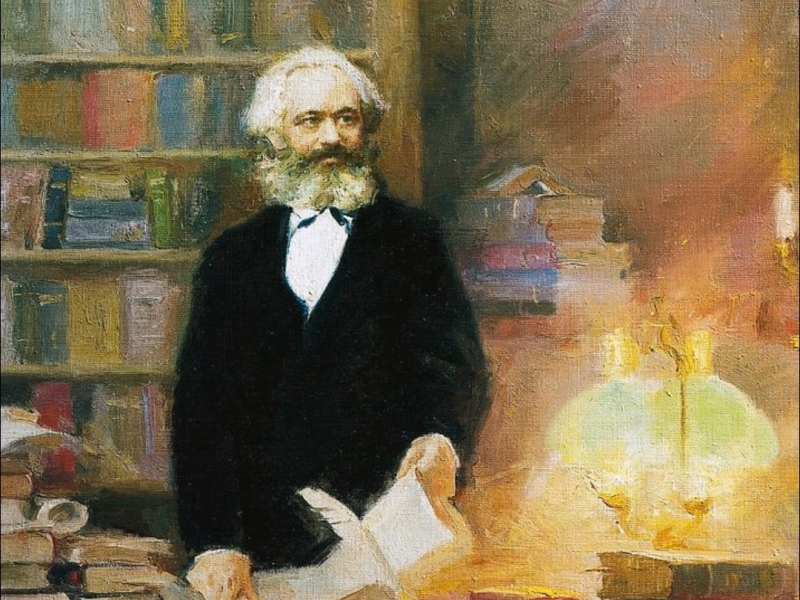
Image: Collected
More than a century after his death, Karl Marx remains one of the most influential and debated thinkers in modern history. His writings on capitalism, class, labour, wealth and social change continue to shape political debates, academic research and public discussions. Although the economic and political world has changed significantly since Marx's time, many of the questions he raised remain relevant today.
One of Marx's central concerns was the unequal distribution of wealth. He argued that capitalism could lead to the accumulation of wealth and productive power in the hands of a relatively small group of people, while workers remained dependent on wages.
Today, discussions about wealth inequality remain prominent. The growing economic power of large corporations, the wealth of billionaires and differences in income and living standards have renewed interest in questions Marx raised about who owns wealth and who benefits most from economic growth.
Marx also placed great importance on the relationship between workers and the owners of capital. He examined how workers sell their labour in exchange for wages and argued that the structure of capitalist production could leave workers with limited control over their work.
Modern employment has introduced forms of labour that Marx could not have predicted, including the gig economy, remote work and platform-based employment. However, debates over wages, job security, working conditions and workers' rights continue to reflect some of the broader questions found in Marx's analysis of labour.
Technological development has transformed the way people work and produce goods. Automation, artificial intelligence and digital platforms are now changing entire industries.
Marx closely examined how technological development could transform production under capitalism. While he wrote long before computers and artificial intelligence existed, his broader analysis of the relationship between technology, production and capital continues to provide a framework for examining who controls new technologies and how their economic benefits are distributed.
Marx also explored how goods become commodities within capitalist societies. He argued that products can acquire social and economic meanings beyond their practical uses.
In the modern world, consumer culture has expanded dramatically. Advertising, branding and social media encourage people to associate products with identity, status and lifestyle. Marx's ideas about commodities therefore remain useful for examining how economic systems influence people's relationship with the things they buy.
Marx's analysis was largely focused on the capitalism of the 19th century, but capitalism has since developed into a highly interconnected global system. Companies operate across borders, supply chains stretch across continents and investment moves rapidly between countries.
This global economy has created enormous opportunities for trade and economic development, but it has also raised questions about labour conditions, economic dependency and the distribution of profits. Marx's focus on the relationship between capital and labour remains relevant to these debates.
Class was at the centre of Marx's understanding of society. He believed that economic relationships played a major role in shaping social and political life.
Contemporary societies are more complex than the class divisions Marx described. Professional groups, entrepreneurs, managers and large middle classes have become important parts of modern economies. Nevertheless, economic class remains an important factor in discussions about education, housing, employment, political influence and social mobility.
Marx remains relevant not necessarily because every prediction he made was correct, but because his ideas provide a framework for questioning economic and social structures.
His work encourages people to ask fundamental questions: Who owns productive resources? Who benefits from economic growth? How is labour valued? Why are some groups economically powerful while others remain vulnerable?
These questions can be examined from perspectives that support Marx's ideas as well as from perspectives that strongly criticise them.
Marx's continued relevance does not mean that his entire political or economic theory must be accepted. Many aspects of Marxism have been challenged by economists, historians and political thinkers. The experiences of countries that adopted Marxist-inspired political systems have also produced extensive debate about the strengths and limitations of his ideas.
Yet the fact that Marx continues to generate disagreement is itself part of his significance. His writings remain a starting point for discussions about capitalism, inequality, labour and social change.
Karl Marx lived in a world very different from the one we inhabit today. Industrial factories have been joined by digital platforms, artificial intelligence and global corporations. Nevertheless, questions about wealth, work, ownership and inequality remain central to modern society.
Marx's enduring relevance lies less in providing ready-made answers to today's problems and more in encouraging people to examine the economic structures behind them. Whether one agrees with him or not, his ideas continue to offer a powerful lens through which the modern world can be questioned and understood.