

- Zelenskyy warns Starshield limits are hindering drone interceptions |
- Govt considers revamping school food distribution system |
- Service tenure expiry leads to retirement of five BAF officers |
- HSC supplementary exams scheduled to begin on December 1 |
- US ambassador meets Indian High Commissioner amid political uncertainty |
German Carmakers Struggle as China Sales Slump, Volkswagen Posts €5.8 Billion Loss
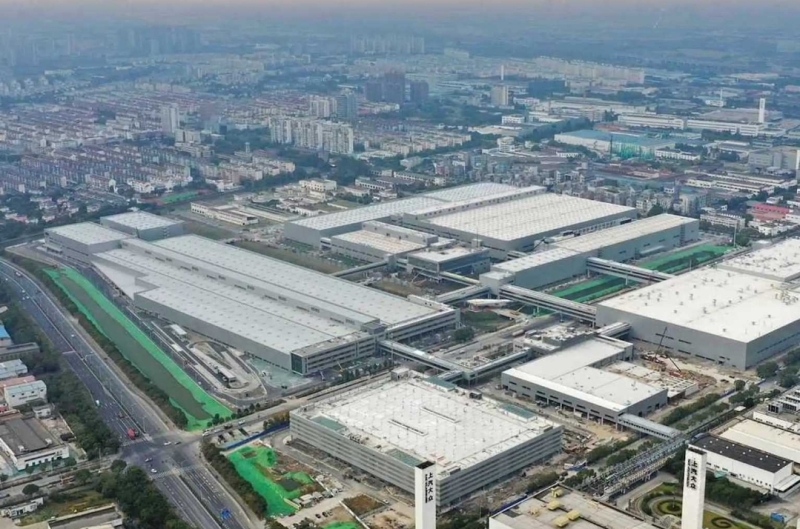
Image: Collected
Germany’s biggest carmakers are facing growing pressure in China, once their most important overseas market, as local electric-vehicle makers gain ground and sales continue to fall.
Volkswagen reported a loss of €5.8 billion ($6.5 billion) after tax in the July-to-September quarter, compared with a €1.1 billion loss in the same period last year. The company’s operating loss was about €5.9 billion, its worst quarterly result in more than a decade. Most of the loss came from one-off charges, including a €6.4 billion non-cash writedown linked to Porsche and around €1 billion in impairments on Chinese assets.
Volkswagen said weak demand in China, intense price competition and the rising share of lower-margin electric vehicles had hurt its results. Global deliveries fell 14.3 percent to 1.89 million vehicles, while deliveries in China dropped 38.5 percent to 405,800.
The company is now planning deeper restructuring. It has already agreed in principle with unions to cut 50,000 additional jobs across the group, bringing planned reductions to as many as 120,000 jobs by the end of the decade.
Volkswagen is not alone. BMW and Mercedes-Benz have also announced job cuts and issued profit warnings this year as they struggle to adapt to China’s rapidly changing car market.
China’s domestic brands have expanded quickly, helped by government support for electric vehicles. BYD and Xpeng, among others, have won customers with advanced technology, competitive pricing and fast-growing EV line-ups. New-energy vehicles accounted for a record 67.8 percent of Chinese car sales in October.
According to AFP calculations, annual deliveries by the three major German carmakers in China fell by about one-third between 2019 and 2025, to 3.87 million vehicles. Meanwhile, Chinese brands’ share of their home market rose from 37.8 percent to 65.3 percent.
“The legacy automakers in China were bringing analogue toys to a digital party,” said Tu Le, an analyst at Sino Auto Insights.
German manufacturers are now shifting more engineering work to China. Volkswagen says its center in Hefei can design cars from start to finish, while BMW and Volkswagen hope to export China-built vehicles to other Asia-Pacific markets. Mercedes-Benz has also said it will overhaul its China strategy rather than withdraw from the market.
“There’s not a play where you put China aside,” Mercedes-Benz CEO Ola Källenius said in October.
For Germany’s car industry, the challenge is no longer only losing sales in China. It is learning to compete in a market where Chinese companies now set the pace in electric vehicles, software and manufacturing speed.