

- Oil Shock Sends Asian Markets Lower as Middle East Conflict Threatens Global Shipping |
- Trump Links Iran War to US Midterms, Backs United Ireland |
- PM Tarique Rahman Seeks Public Cooperation to Tackle Nationwide Dengue Outbreak |
- Jatiyatabadi Mahila Dal Vows to Lead Fight Against Rape, Violence Against Women and Children |
- 'Honorable' Dropped: PM Starts Implementing Decision from His Own Office |
Trump Links Iran War to US Midterms, Backs United Ireland
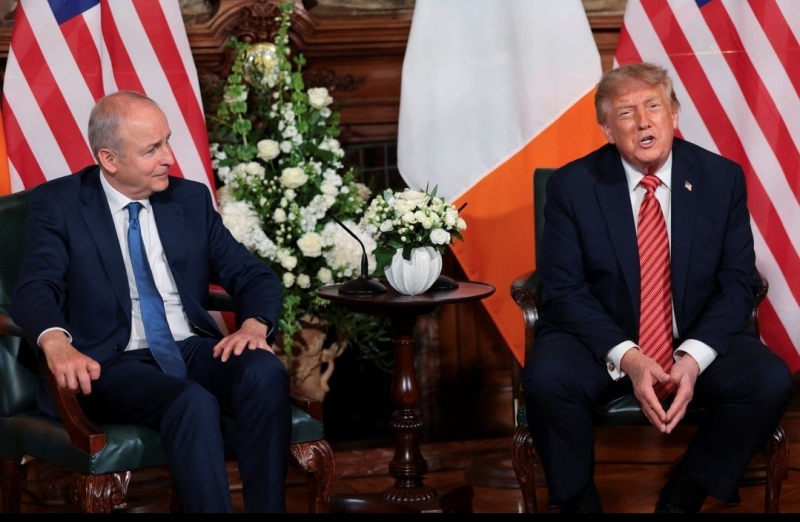
Image: Collected
US President Donald Trump has said he expects the war with Iran to end shortly after the November midterm elections, while accusing Tehran of prolonging the conflict in an attempt to influence American voters.
Speaking to reporters during a visit to Ireland, Trump said Iran was “trying to hold out as long as they can to complicate the election.” He added that the war would probably end “right after the midterms” because Tehran would be unable to sustain the conflict under US economic pressure.
Trump repeated his demand that Iran must not be allowed to acquire a nuclear weapon, saying: “Iran cannot have a nuclear weapon. It’s very simple.” He also predicted that oil and gas prices would fall sharply once the conflict ended.
The comments came as US energy prices and the wider economic impact of the war emerged as potential political issues ahead of the midterm elections. However, reports citing senior US officials said some members of Trump’s administration privately believed the conflict could continue much longer, potentially through the remainder of his term.
Remarks on Ireland
During his meetings with Irish President Catherine Connolly and Taoiseach Micheál Martin, Trump said he would “love to see” a united Ireland. He described Irish reunification as “a fantastic thing” and said he believed it would happen eventually.
Trump acknowledged that any constitutional change would involve the United Kingdom and would have to follow the democratic and legal processes established under the Good Friday Agreement. His comments nevertheless placed the sensitive issue of Irish unity at the centre of his Dublin visit.
Gaza and Middle East
Trump also defended his administration’s record on Gaza after facing criticism over US support for Israel. He claimed that Washington had helped “put out the fire” and had secured the return of hostages held during the conflict.
The remarks came amid continuing international criticism of Israel’s military campaign and the humanitarian situation in Gaza. Protests were planned across Ireland during Trump’s visit, with demonstrators focusing particularly on US policy toward Israel and Palestine.
Trump additionally said the United States would not allow Iran to obtain a nuclear weapon and maintained an optimistic tone about the broader regional crisis, telling reporters that “everything will work out fine.”
His statements in Ireland combined foreign-policy claims, election-year messaging and comments on Irish constitutional politics, reflecting the overlap between the Middle East conflict and the domestic political pressures facing his administration before the midterms.