

- Oil Shock Sends Asian Markets Lower as Middle East Conflict Threatens Global Shipping |
- Trump Links Iran War to US Midterms, Backs United Ireland |
- PM Tarique Rahman Seeks Public Cooperation to Tackle Nationwide Dengue Outbreak |
- Jatiyatabadi Mahila Dal Vows to Lead Fight Against Rape, Violence Against Women and Children |
- 'Honorable' Dropped: PM Starts Implementing Decision from His Own Office |
Climate Change Increasing Risk of Avalanches and Floods in Nepal
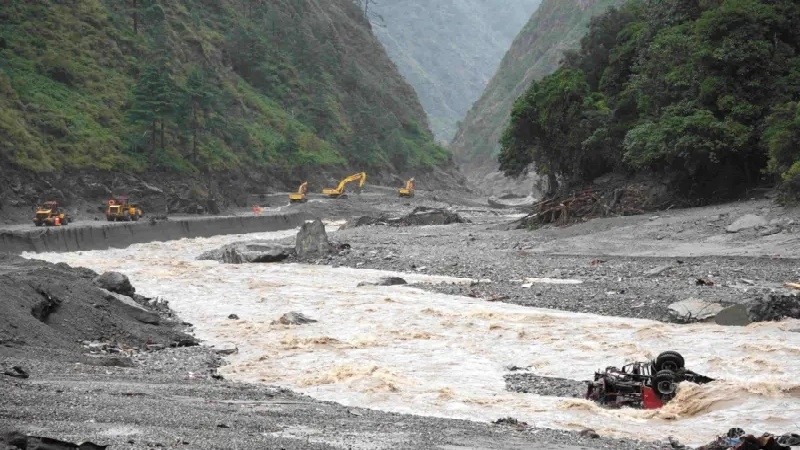
Image: Collected
Recent avalanches, landslides and flash floods in Nepal have renewed concerns over the growing impact of climate change on the Himalayan region. Experts say climate change cannot be identified as the sole cause of these disasters, but rising global temperatures are making Himalayan glaciers, snow and mountain slopes increasingly unstable, raising the risk of avalanches, glacial floods, landslides and sudden mountain torrents.
The Himalayas are among the world’s most rapidly changing mountain regions. As global temperatures rise, many glaciers across the region are shrinking at an accelerated rate. Melting ice is creating new glacial lakes in some areas while causing existing lakes to expand. If the natural barriers holding these lakes back weaken or collapse, huge volumes of water can rush downstream within a short period, causing devastating floods. Such events are known as glacial lake outburst floods, or GLOFs.
Climate change is also affecting permafrost—the permanently frozen soil and rock found beneath parts of the mountains. As temperatures rise, ice within cracks and soil can melt, weakening mountain slopes. This increases the likelihood of large masses of ice, rock and soil collapsing downhill.
In some cases, landslides and avalanches can block rivers, creating temporary natural dams. If these barriers later collapse, they can release powerful surges of water and debris, triggering sudden and destructive floods.
A recent incident in Nepal demonstrated how these hazards can interact. Following an avalanche, large quantities of ice, rocks and soil entered a river and disrupted its normal flow. When the obstruction eventually gave way, a sudden flood swept downstream, threatening riverside settlements, roads, bridges and other infrastructure, while also putting lives at risk.
Experts say changing rainfall patterns are adding another layer of danger. Intense rainfall over a short period can weaken soil and destabilise mountain slopes, increasing the risk of landslides. In some areas, heavy rain combined with unstable glaciers and snow can create multiple hazards at the same time.
Studies have shown that Himalayan glaciers have lost significant amounts of ice over recent decades. If the current trend of global warming continues, many more glaciers are expected to shrink. Although increased melting can initially cause higher water flows in rivers, the long-term loss of glacier ice could lead to water shortages during dry seasons. At the same time, the risk of glacial lake outburst floods and mountain floods could increase.
However, experts caution against attributing any individual disaster directly to climate change without detailed analysis. Long-term data on weather patterns, glacier behaviour, rainfall and geological conditions are needed to determine the precise causes of specific events. Climate change is therefore increasingly viewed as a factor that amplifies the risks rather than the sole cause of Nepal’s recent disasters.
Experts say Nepal needs stronger monitoring of glaciers and glacial lakes, improved early-warning systems, better control of settlements in high-risk areas and stronger safety measures for mountain infrastructure. Reducing greenhouse gas emissions and limiting global warming will also be essential to address the underlying climate threat.
The melting of Himalayan ice is not only a concern for Nepal. It has implications for millions of people across South Asia, as rivers originating in the Himalayas support communities, agriculture and economies across countries including India and Bangladesh.
For this reason, the recent avalanches and floods in Nepal are being viewed as a warning of the broader climate and disaster risks facing the Himalayan region and downstream communities across South Asia.