

- Oil Shock Sends Asian Markets Lower as Middle East Conflict Threatens Global Shipping |
- Trump Links Iran War to US Midterms, Backs United Ireland |
- PM Tarique Rahman Seeks Public Cooperation to Tackle Nationwide Dengue Outbreak |
- Jatiyatabadi Mahila Dal Vows to Lead Fight Against Rape, Violence Against Women and Children |
- 'Honorable' Dropped: PM Starts Implementing Decision from His Own Office |
Colombia Earthquake Highlights Growing Risks in a Changing Climate and Water Cycle
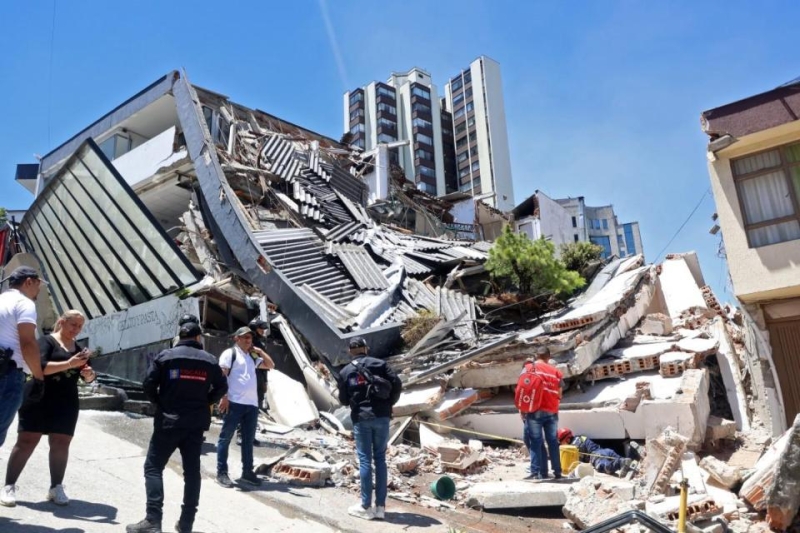
Photo : Collected
A powerful earthquake in Colombia, which caused significant loss of life and widespread damage, has once again drawn attention to the growing risks posed by natural disasters and changing environmental conditions. A magnitude 7.4 earthquake struck western Colombia at 07:34 local time (12:34 GMT), according to the country's geological service. The earthquake occurred at a depth of 103 kilometres (64 miles) and was felt across a vast area of western Colombia.
Colombian authorities reported 312 deaths and more than 294,000 people affected. However, the figures have continued to change as rescue and damage assessment operations remain underway.
The epicentre was near the village of San José del Palmar in Chocó province. Despite damage to roads connecting the area with other parts of the country, local authorities reported no deaths or injuries in the village. Cali, located about 200 kilometres from the epicentre, was among the worst-affected areas, with 85 deaths reported. At least 900 people were also injured, according to Colombia's Association of Capital Cities (Asocapitales).
While the earthquake itself is a geological event and is not directly caused by climate change, the disaster highlights the importance of strengthening preparedness, infrastructure and resilience in a world increasingly exposed to environmental risks. At the same time, floods, extreme rainfall, droughts, glacier loss and water shortages are becoming increasingly visible across different parts of the world.
Water—the lifeblood of the planet—is undergoing significant changes. From intense rainfall and sudden flooding to prolonged droughts and melting glaciers, the global water cycle is becoming increasingly unstable. These changes are affecting ecosystems, agriculture, economies and human lives.
The continuous movement of water between the oceans, atmosphere, land and ice forms the global water cycle. It supports ecosystems, agriculture, energy production and human life. However, human-induced climate change, driven by rising concentrations of greenhouse gases, is altering the dynamics of this natural cycle. Understanding these changes is essential for developing sustainable water policies and infrastructure.
As atmospheric temperatures rise, evaporation from oceans, soil and other surfaces also increases. According to the Clausius-Clapeyron relationship, air can hold approximately 7 percent more moisture for every 1°C increase in temperature. Warmer air can therefore contain more water vapour, which can contribute to heavier rainfall when that moisture is released. This increases the risk of intense rainfall and flooding.
However, the additional atmospheric moisture is not distributed evenly across all regions. Regional wind patterns, ocean currents and geographical conditions influence where and when rainfall occurs. While global average precipitation may increase, many subtropical and semi-arid regions are becoming drier, facing prolonged droughts and water shortages. Meanwhile, some areas in the middle and higher latitudes and parts of the tropics are experiencing increased rainfall.
Changes in the timing and intensity of seasonal rainfall are also creating new challenges for agriculture and water resource management. In some areas, monsoon seasons are starting later, while in others they are ending earlier. Such changes can disrupt agricultural seasons and existing water management plans.
The effects of climate change are also becoming increasingly visible in glaciers and snow cover. Rising temperatures are causing glaciers to retreat rapidly. The shrinking glaciers of the Himalayas, Andes and Alps are contributing to rising sea levels while also threatening the long-term water sources of communities that depend on seasonal snow and glacier melt.
Extreme weather is another major manifestation of these changes. Warmer oceans can provide additional energy to tropical cyclones, typhoons and hurricanes, potentially increasing the risk of destructive flooding and storm surges. At the same time, irregular rainfall patterns can contribute to prolonged heatwaves and droughts, placing additional pressure on agriculture, food security and water resources.
Changes in land use are making the situation even more complex. Urbanisation, deforestation and the destruction of wetlands are reducing the natural ability of soil to absorb and store water. As a result, surface runoff and flash flooding can increase during heavy rainfall, while groundwater recharge is reduced. Poorly planned drainage systems and extensive concrete surfaces in urban areas can also make cities more vulnerable to flooding.
Climate change is also affecting water quality. Heavy rainfall and flooding can carry pollutants, waste and sediment into rivers and other water bodies. During droughts, reduced river flows can increase the concentration of pollutants, making water less safe. Changes in temperature can also affect aquatic organisms, oxygen levels and biodiversity.
These interconnected impacts demonstrate that the global water cycle is not simply becoming more intense; it is also becoming increasingly unstable. Effective and sustainable water resource management is therefore essential. Rainwater harvesting, improved irrigation systems, wetland restoration and sustainable urban drainage can all help communities adapt to changing water conditions. At the same time, reducing greenhouse gas emissions remains essential to limiting further disruption to the water cycle.
The recent earthquake in Colombia, although not directly caused by climate change, highlights the importance of preparedness, resilient infrastructure and effective disaster management. Meanwhile, the increasing risks associated with floods, droughts, extreme rainfall and water shortages demonstrate the need for water management systems that can adapt to a changing climate.
From changing rainfall patterns and shrinking glaciers to floods and droughts, the evidence shows that water is at the centre of the climate crisis. Adapting water management, urban planning and infrastructure to changing conditions, while addressing the underlying causes of climate change, is becoming increasingly important for protecting ecosystems, economies and human lives.